
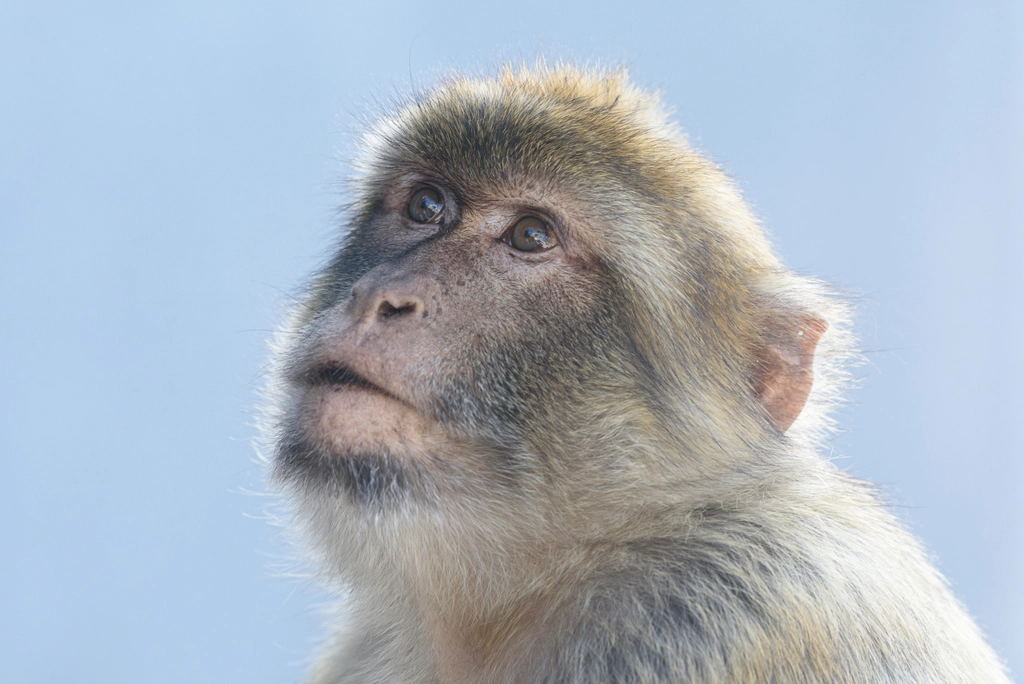
In this age of bait, it’s always nice when a headline explains exactly what the story is about. “Neuroscientists Decipher Procrastination: A Brain Mechanism Explains Why People Leave Certain Tasks for Later” is exactly the sort of headline I like to see. It’s a lot more likely to get me to click than “What Neuroscientists Discovered About Monkey Procrastination Is Jaw-Dropping (Don’t Ignore This!)“1
Anyway, yeah, they figured out procrastination. Or rather, they added to a body of rather chunky existing research across neuroscience and psychology. The reason this research is interesting is because, to the best of my knowledge, evidence-based understanding of the precise neural circuits involved is a new development. As detailed in the Wired story, the scientists discovered that turning off a specific region of the brain would turn off the urge to procrastinate. Here’s Wired:
The experimental design incorporated an unpleasant element. The monkeys were given the choice of drinking a moderate amount of water without negative consequences or drinking a larger amount on the condition of receiving a direct blast of air in the face. Although the reward was greater in the second option, it involved an uncomfortable experience.
As the researchers anticipated, the macaques’ motivation to complete the task and access the water decreased considerably when the aversive stimulus was introduced. This behavior allowed them to identify a brain circuit that acts as a brake on motivation in the face of anticipated adverse situations.
If you’re hoping that this development might help with your procrastination problem, you might be waiting a while. You definitely won’t want to make use of the method involved in the study — Motivation under aversive conditions is regulated by a striatopallidal pathway in primates — as it probably wasn’t a pleasant experience for the two macaques involved. The details in the Wired story are obfuscated, but the study is not: the monkeys had brain implants that let the scientists inject a drug that acts as an agonist for DREADDs (I don’t make this stuff up, it’s an acronym for Designer Receptors Exclusively Activated By Designer Drugs) into a specific region of the brain. Lovely!
I recommend reading both the Wired story and whatever you can make out of the study, because both are interesting, and only the study has wonderful diagrams like this.

While there’s no doubt this sort of research might eventually lead to a pill (hopefully not an implant) that you can chomp to overcome procrastination, that might not be a good thing. As much as I have longed for a way to cauterise the inconvenient bits of my personality but procrastination exists for a reason; when it’s functioning normally it’s a very smart way to both conserve energy and avoid horrible things. What we’re interested in, here at the Cynic’s Guide to Self-Improvement, is when procrastination becomes a personal problem that gets in the way of things we want to be doing. And this is where I’m going to veer off the superhighway of science and into the off-road track of pure anecdote-infused speculation.

Imagine a kid who takes things very seriously and works very hard. Bright, but anxious. Sensitive. Eager to please. And the person they most want to please — and therefore their hardest taskmaster — is themselves.
Imagine they really like… it can be anything, but we’ll say it’s colouring-in. They’re good at not going over the lines. And they like the praise they get for being good at it, and therefore their anxiety about not going over the lines increases, and then they do go over the lines, because to err is human, but does the kid know that? No. And their bitter upset at this mistake is going to overwhelm them utterly, to make them feel useless and horrid; they are going to scream at themselves internally (maybe externally too) because that’s the only thing they can think of that matches the intensity of pain they are feeling, and when adults coo and caress “don’t worry, it’s only a colouring-in!” everything will feel worse because not only is the kid upset at their failure but also the adults around don’t comprehend the maelstrom, and on top of that is the knowledge that the adults are right, that the kid is overreacting, and it is just a colouring-in that has no right to make them feel so comprehensively awful.
Maybe it’s not that hard to imagine. It wasn’t for me.
The kid wanted to do a colouring-in, but this sudden emotional hell is so much worse than a blast of air to the face.
Now multiply this effect by everything, forever. Every action and reaction that for some reason has importance attached makes them feel this way.
The solution? Escape. Avoid the things that make them feel so awful because the emotional cost of doing that is somehow less than facing the maelstrom, and because they’ve inadvertently discovered the world’s most damaging yet effective life-hack: desperate terror makes them act. It might even make them feel like they’re finally doing good, which is all they wanted, and eventually their treacherously malleable brain will not know any other way of achieving anything.
I’ll put it another way: why do anything you want to do, when everything you want also comes pre-packaged with self-inflicted injury and insult?

For me, at least, I think this explains… a lot of things. Not least the illogic of procrastination, the way it feels awful at the time but you can’t stop it. Procrastination is one bit of your brain and body trying to protect another bit from yet another bit, all of which are you. And it highlights the importance of being very intentionally kind to yourself, even when/especially if that’s hard to do, and of CBT rituals like the ones outlined in this post which is somehow over an entire year old? Where the hell did that time go?
Remember something we’ve said a lot here: if being mean to yourself worked, it’d have worked by now.
Or — because it does work to a certain extent, else we wouldn’t do it — it doesn’t work well, or you probably wouldn’t be reading this.
On a related note, here’s something dear to my heart. I have noticed a tendency for those of us on the political left to sniff and sneer at anything smacking of self-improvement because of the inherently individualistic and capitalistic framing and… yes, that is a problem! But so is not knowing how to organise yourself well enough to live well, or to help organise others. While I’m at it, dunking on things online and on podcasts, as fun as it is, isn’t winning. So there.
In lieu of all that, here is Time Management for Anarchists: a well-argued and straightforward here’s-how-to-sort-your-💩-out guide for those of us who don’t have bosses, or would like to not have one, or who would prefer to keep the bastards off your backs as much as possible.
It was written back in the More Analogue Days, but there’s nothing wrong with that. In fact, I’ve found the best systems either are analogue, or most resemble analogue in digital form.
These are good quotes:
I hate the bullshit moralism connected with being organized. All this stuff about get started early. If you know how long something takes you can indulge yourself and leave it to the last day.
Yes! Invalidate procrastination and toxic productivity simultaneously whilst doing the things you want to do!
I don’t really believe in lazy, I don’t really know any lazy people. I know people with low self confidence who find it really hard to believe in their own projects. I know people who have never learned the pleasure of stimulating and engaging work. I know people who are too worn down by eight hours of pointless, meaningless tasks to take on new projects.
Precisely.
Thanks, as always, for reading. God willing — and as we have learned, gods are frequently unwilling — I’ll be back with something new next week.
Now, leave a comment!
This place actually has good, non-toxic comments! No, I don’t know how I did it either!
Like & Subscribe
If you want to support my work, please consider a paid subscription. (Once you are done considering, please take out a paid subscription.)
Subscribe for $5 a month, or subscribe for $50 a year.
I’ll let you do the maths on which is better.
- For irony’s sake, I almost made this the title of the post ↩︎


Leave a Reply to AmyLSCancel reply