Tag: Newsletter

  • Embodying embodiment

    Embodying embodiment

    Last year, when I drew a bit of a line under my self-improvement experiment by writing up the results for The Spinoff, I expanded on a growing hunch that the main issue with self-improvement originates in the medium; books simply aren’t a good way to learn things that involve your body. Here’s what I said at the time.

    Whether you’re learning an instrument or forming atomic habits, you’ll do better if you’re doing it with others, while taking deliberate, somatic action that’s much more than turning pages or imbibing inspirational TikToks.

    The idea of somatic self-improvement has continued to interest me, and it all came to a head (this is a pun, you will realise how clever it is shortly) when I was trying to do a digital map for the online tabletop role-playing game I DM for a few mates and found myself drawing – literally – a blank. I tried several different computer-based tools, all of which promised to help DMs make dungeons in mere minutes. Nothing helped, and I found myself in a weird paralysis panic. It wasn’t that I didn’t know how to use the tools, although there was a learning curve; it was more like my brain and what I was attempting to make felt fundamentally disconnected. The ideas I had simply weren’t translating into the digital medium, and this felt quite scary, to be honest, as someone who makes digital things for a living.

    Then I grabbed a sheet of paper and a pencil and drew the dungeon map I’d been failing to make for several hours using digital tools. It took about ten minutes.

    And then – having found a starting point, able to envision and render my ideas – I could finally make progress using the digital tools.

    What might have been going on here? I mean, apart from the obvious: that I am kind of an idiot. Anyone who has ever done anything design-wise or who draws things knows it’s helpful to sketch out an idea first, and it’s odd that I didn’t think of doing that. But I do want to explore the why a little bit, because sometimes understanding the why helps us get on with the how.

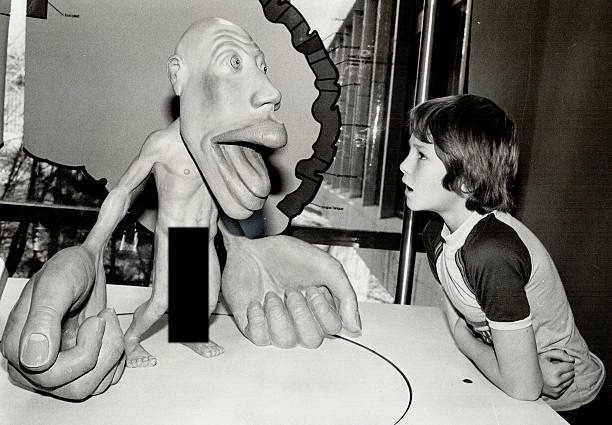
    It’s time to return to our old buddy, the Sensory Homunculus. “Return to,” here is just a figure of speech; I’m not sure I’ve specifically mentioned our little friend here before. You’d probably remember him, because he looks like this:

    Kill it! Kill it!

    What is that… abomination? The sensory homunculus (and its close relation, the cortical homunculus) is a representation of the space our brains use to run different bits of our body via the nerves1. As I’m sure you’ve noted, the hands are bigger than the rest of the body combined. The right hand alone (the sculpture is of someone who is right-hand dominant) is the same size as nearly everything else in the body. When people compliment you by saying “You’ve got a lot of nerve!” they are talking about your hands specifically.

    I’m interested in this little dude not just because I find it entertainingly horrific but because the implications are fascinating. The priority that our brains assign to our hands, and by extension, the things we do with our hands, may be incredibly helpful in explaining a great number of things, some of of which are my perpetual bugbears: why self-improvement can so hard to put into action, why it’s so easy to get distracted on a digital device, why we fidget, why fidgeting can improve concentration, and why we can’t put down our bloody phones.

    As in, the phone you’re probably reading this article on.

    There is a field of philosophy that intersects with neuroscience called “embodied cognition.” The idea is the mind-body duality is a lie; they’re actually all one piece. Physiologically this amounts to less a theory and more a hard truth, one that’s easily observed if you sever the spinal cord, or cut off a limb. Your brain, body, nerves, muscles; everything is intertwined. Embodied cognition argues less that cognition requires a body, and more that cognition is a body, and that it’s rather silly to speak of cognition without it. I like this theory, not least because it’s another nail in the “OMG AI is going to become sentient any financial year now” coffin.2 And to me it’s another reason why relying on AI can be so dangerous, as doing so delivers the cognitive impact of playing rugby against a brick wall.

    I shouldn’t spend too long on this, although God knows I’d love to; here is the Wikipedia page on embodied cognition if you’d like to do some further reading. My point is this: your hands aren’t just connected to your brain. Your hands are your brain. Kind of! With some obvious and quite important caveats! Like if you lose your hands you can live, but if you get Marie Antoinetted you can’t.

    Put it this way: If you’re using your hands, you’re using some big chunks of your brain. And those chunks are connecting to other chunks, and it’s possible that all these brain bits3, working together, mean you might have an easier time doing what you’re doing, or continuing doing whatever you’re doing.

    I think this may be why I had such an easy time sketching my dungeon diagram compared to when I was trying to lay it out via computer software. There’s one less abstraction layer; doing it in a tactile way just made more sense to my body. I also think it’s part of what keeps us so tethered to our phones in particular. Apple’s greatest triumph – soon shared by the rest of the tech world – was creating technology that you caress to make it work.4 The brain-space devoted to Hand Stuff combines with all the tricks learned by the unholy combination of television, psychology, social connection, videogames, and gambling to create a device that’s almost literally unputdownable.

    Because our lives are governed by malicious deities of irony, a fact I’ve long respected, you won’t be surprised to learn that while I was mulling all this over I scrolled across a video essay saying almost exactly the same thing only more coherently, which I’ve posted below.

    Given what seemed to be accumulating signs that I should, I have returned to writing. As in, handwriting.

    No, I didn’t write this article by hand. (It’s too hard to embed the YouTube videos.) But I have made a point of handwriting notes again, and after struggling with a manuscript for a long-stalled fiction project, I’ve started writing it by hand too.

    There are a few reasons for this. One is that the positive association between handwriting and memory is very well established. There’s no need for one of my pet theories here; there are plenty of real ones to choose from. Don’t take my word for it, here’s Scientific American’s:

    Sophia Vinci-Booher says [the] findings are exciting and consistent with past research. “You can see that in tasks that really lock the motor and sensory systems together, such as in handwriting, there’s this really clear tie between this motor action being accomplished and the visual and conceptual recognition being created,” she says. “As you’re drawing a letter or writing a word, you’re taking this perceptual understanding of something and using your motor system to create it.” That creation is then fed back into the visual system, where it’s processed again—strengthening the connection between an action and the images or words associated with it. It’s similar to imagining something and then creating it: when you materialize something from your imagination (by writing it, drawing it or building it), this reinforces the imagined concept and helps it stick in your memory.

    I’ve talked before about how alarming I find the memory loss arising from parenting-related sleep deprivation, and this might be one way to stave it off. Also, I wasn’t happy with my handwriting. Over years of prioritising typing, my writing had degraded to a kind of sine wave with an occasional spike, like the reading on the heart monitor of someone who is about to die tragically in a hospital show. So I’m writing the first draft of my book and all my notes in cursive, which I never learned properly, so I can finally like how my handwriting looks.

    This sort of thing has worked well for me in the past. About halfway through my second year of university I taught myself to touch-type while pulling an all-nighter because I wanted to spend the following day snowboarding.5 It was very slow at first but by the morning I was having some quite interesting auditory hallucinations and I could touch-type. I’m not doing any all-nighters this time but I’m already finding an enormous improvement in my cursive after only a few days.

    There are other benefits as well. This morning I put thirty minutes aside for manuscript writing/cursive practice, and I found something interesting: the writer’s block6 I’d had for a long time on this specific project completely went away. Why? Because instead of agonising over the prose and editing as I went, I was instead agonising over the shapes of the letters. The writing just kind of wrote itself; it was the least I’ve self-edited in years. I timed myself and to my surprise, I found that after thirty minutes I’d written more than four hundred words.7

    Oh, and I didn’t look at my phone the entire time I was writing. I didn’t even feel tempted to. Given that smartphones give me itchier fingers than smoking ever did, this is a real achievement. Like so much else, this is obvious in hindsight. Of course it’s hard to write on the Infinite Distraction Machine! What else did I expect?

    On that note, here is another video that clicked with me for… reasons.

    Whether you watched that weird little video or not, do start a creative project. Acquire a hand loom and become a neo-Luddite. Do an upsetting drawing of a cat. Join the Butlerian Jihad. Write the furry fanfic you’ve always wanted to write.

    Just make sure you use your hands to do it.

    Then use your computer or phone to leave a comment and tell me all about it.


    Like & Subscribe

    If you want to support my work, please consider a paid subscription. (Once you are done considering, please take out a paid subscription.)

    Subscribe for $5 a month, or subscribe for $50 a year.

    I’ll let you do the maths on which is better.


    1. It’s not a perfect representation, of course – the homunculus is for illustrative purposes only. As the article says: “The amount of cortex devoted to any given body region is not proportional to that body region’s surface area or volume, but rather to how richly innervated that region is.” And I understand several of those words, which means I’m obviously qualified to be writing this article. ↩︎
    2. At this stage stage you could convincingly argue that it’s more nails than coffin. ↩︎
    3. Sorry for all the neuroscience terms like “brain bits.” I can’t help my enormous vocabulary. Also, all the mistakes in this article are there on purpose to upset all the neuroscientists that I’m close friends with. ↩︎
    4. Starting with the venerable iPod. ↩︎
    5. See also footnotes in previous articles about the autism being more obvious in hindsight. ↩︎
    6. This is just a pretentious way of saying I get anxious and procrastinate a lot about writing specifically. ↩︎
    7. Which I had to count myself, with my brain, like a commoner. ↩︎

  • In which I apply for a job

    In which I apply for a job

    A few years ago I did a blog bit where I’d publicly apply for jobs while determinedly misunderstanding the job description. I’d apply for jobs like “scrum master” and talk up my high school rugby experience. I also applied for a job at British American Tobacco by dressing as a giant cigarette and asking teenagers to take up smoking. It was fun, but after a few I got bored and doing things like dressing as a giant cigarette was intersecting uncomfortably with my need to actually apply for jobs. So I stopped.

    Today, job applications are back on my mind. I am spending entire minutes in the mind-melting hell of LinkedIn before getting upset at the spectacle of endless employees praising the AI leopard that their employers have hired to eat their faces. There simply aren’t many jobs out there for anyone who isn’t willing to sing paens to a technology explicitly designed to replace people. In between, I see the world’s most confidently stupid business enthusiasts opining about things like how we must dig for more fossil fuels to maintain “energy independence” – evidently their feelings tell them fossil fuels aren’t finite – and blaming renewable energy for the current energy crisis, which is as close to a Bizarro World take that it’s possible to have outside of a comic book. (If you’re wondering, the crisis is because we depend on fossil fuels, which is in turn because oil companies worked very hard to make sure we didn’t switch to renewables.)

    It was all very depressing. Then I saw the job ad for an “End of the World” library curator.

    So I’m back to the public job application, except this one isn’t a bit. There might be the occasional joke here and there but I’ve never been more serious.

    I sent the email a few minutes ago, and now I’m publishing it here. I really hope they take me on.


    Gidday!

    I am writing to apply for the job of Curator – Private “End of the World” Library at Westhaven Estate.

    This open cover letter is to demonstrate my extraordinary suitability for this unprecedented role. Firstly, you mention that you’re after someone intellectually curious. That’s me, to a T. I am so intellectually curious that I’m curious about what intellect even is. There’s a lot of that around at the moment with folks pretending that computer code is sentient: it’s become the world’s most boring sport on LinkedIn. Even more importantly, you want someone to “help design and build a private, long-term library on a remote coastal estate in New Zealand.”

    I am so prepared for this it’s terrifying. I have spent on average at least one hour of each day of my life thinking about how to design an apocalypse library. I had always thought that these cumulative years were wasted, but now?

    It seems like fate.

    You say: “The project is to curate a high-conviction, enduring collection — a library that would remain meaningful and useful under extreme long-term scenarios.

    You guys! I am so here for this!

    As I mentioned, I have given this some thought. So let’s get some assumptions out of the way, so we don’t make an ass out of u (or me). To avoid an ass-u-me scenario, I have a few questions for you, starting with:

    What sort of end-of-the-world are you looking for your library to survive?

    Robert Frost (good collection candidate imo) said that “some say the world will end in fire, some say in ice.” I say: he would say ice is great and will suffice, with a name like Frost. But the nature of the world-ending event is very important to the nature of the library.

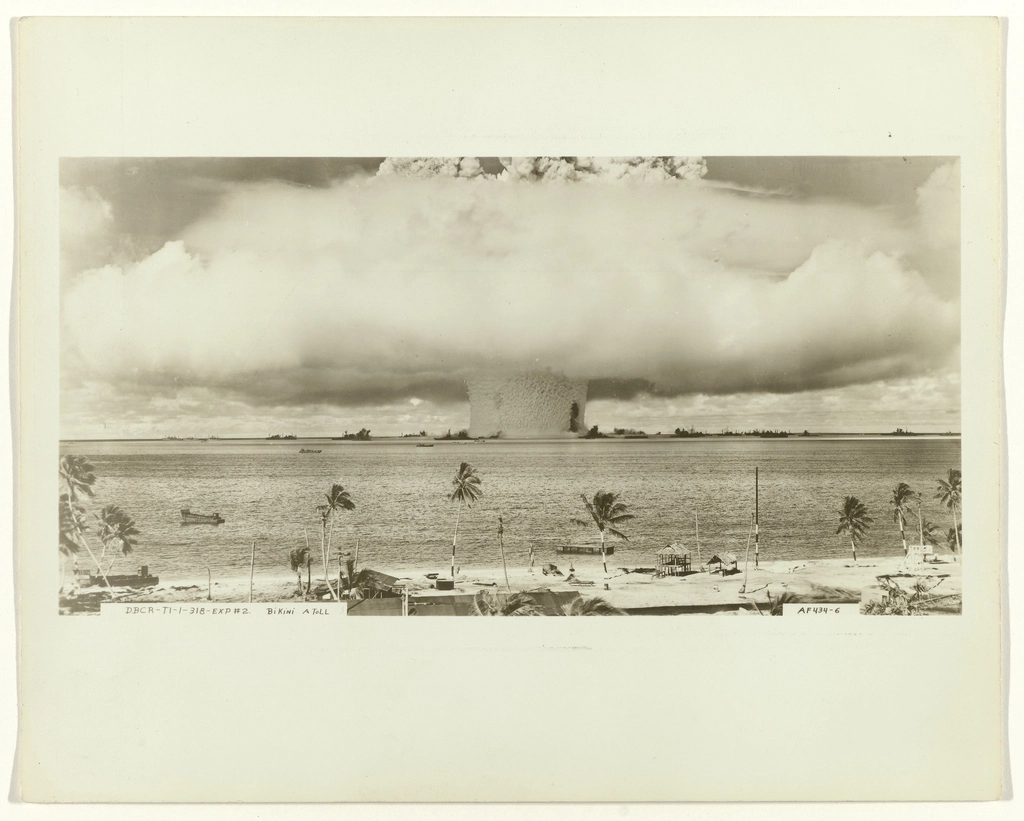
    Let’s say you hold with those who favour fire. Nuclear war, maybe. It’s a good consideration! We do have all these city-burning weapons and an errant flock of geese or Tweet could easily kick off World War Three. It’s the most probable near-term apocalyptic scenario.

    If this happens, your library will be invaluable. Paper, commonly used to make books, is a wonderfully extensible material. For one thing, it is flammable (c.f. The Day After Tomorrow, one for the End of the World DVD collection.) All those books will make great fuel for one lucky roaming band of irradiated miseries who will enjoy a useful supply of kindling after – assuming you didn’t already make an abrupt transition from biology to physics via a nuclear fireball in one of the world’s freshly obliterated cities – you have been killed and your supplies eaten. They’ll be very grateful to you! Your library will be fondly remembered for weeks to entire months until everyone is dead of acute radiation sickness, cancer, or starvation.

    If you want knowledge to survive this scenario, into a future where radiation-proof Morlocks are reclaiming humanity’s lost wisdom, you’ll want something more permanent than paper. Your options include fired clay tablets (they’ve stood the test of time, which is why we know about crooked copper merchants from 1750 BC), stainless steel, or titanium. You’re going to need quite a few metric tons of it, and a lot of storage room. You might want to get to work hollowing out some local mountains, or digging a very extensive basement. You’ll also have to choose between print via embossing or debossing. My pick would be laser engraving; it’s the fastest method I can think of to get writing on to metal.

    That does raise another important point.

    How long into the end of the world are we talking here? Like, do your hypothetical post-apocalypserinos speak English? Are they even human? That’s an important question! An English library is no good in a far-flung future where language will almost certainly have evolved into something completely different: it’s why you struggle to read the original text of Beowulf (good inclusion imo). So if you’re wanting to include “essential knowledge, foundational literature, practical survival and technical domains, philosophy, history, and culture” you are better off not actually printing it in English. (Sure, have some English books kicking around, it can’t hurt – again, choice of medium is important, you’ll want to print on something durable like vellum as a modern hardback or paperback will crumple into moldy unreadable dust within a scant century or two given modern print materials and techniques unless you have very good humidity control and an excellent and implausibly long-lived air-conditioning system.) Instead of English writings, you’re going to want a codex with an included key. Think along the lines of the Golden Record, by Carl Sagan, which adorns the side of the Voyager probe and is currently somewhere in the vicinity of the heliopause. A lot of instructions and meaning can be conveyed this way; you’d be after something like the codex that the advanced aliens in Contact (also by Carl Sagan; definitely include Contact, great yarn) send in their Message to Earth.

    Next point? Location, location location! I’m sure you know all about this in the real-estate sense: you have after all dropped twenty mil on a quite nice bach. But your library needs more in terms of location planning than stunning private coastal views and sea breezes. I hate to be a downer, but Westhaven might not be the best location for it. (Consider my town of Morrinsville instead: it is the closest thing this country has to a tectonically inert flood-and-tsunami-proof location and it could do with a tourist attraction that isn’t a giant fiberglass cow.) First, as the name would suggest, it’s on the West Coast of the South Island New Zealand. That means it’s within cooee of an Alpine Fault rupture which is more geologically overdue than a 12-month pregnancy. I checked the fault map and while there aren’t any known faults where you are, that doesn’t mean much: the whole country is essentially one large faultline and that’s especially true for the Alpine Fault. When that baby pops the entire Southern Alps are going to jolt upwards by several metres and every scenic hillside residence for a hundred kilometers or so on either side is going to be kicked into touch. Your library will come back with snow on it. Or, less poetically, just slide ungracefully into the ocean, like a prop forward scoring one of those boring British tries.

    Speaking of the ocean: The west coast sea breezes are better described as a constant howling gale, and this incessant scream carries a lot of moisture. Unless you like mould more than JK Rowling, this is not ideal for a library. The ocean is important for other reasons. Take a look at the New Zealand map: see how the West Coast is all smooth and the East is all jagged? That’s becaus the ocean is eating the West Coast at a pretty brisk clip. Which brings us to climate change! Rising oceans, groundwater tables, and even faster erosion from extreme weather events will all nudge your library towards inundation, which is less than ideal. There are all sorts of potential locations for libraries but none of them are underwater.

    Another issue I think you’ll face is that books are completely useless without stuff. You are going to need a fully-fledged workshop adjoining your library, with either some very long-life batteries, or instructions for setting up a lithium mine. In fact, this is going to be your greatest challenge. Knowledge is useless without an extant culture to produce the technology through which knowledge can be applied. A common post-apocalyptic fantasy is a bunch of sword-wielding barbarians stumbling on a surviving library (they are literate, of course) and re-inventing heavier-than-air powered flight shortly thereafter. That can’t actually happen. By way of example, there’s a bloke who – inspired by Douglas Adams, good inclusion imo – tried to make a toaster from scratch. It worked, eventually, with much cheating, and a total disregard for electrical safety.

    If you want your post-apocalypse library to endure, you’re going to need people. And the best way to make sure there’s people is to make sure the apocalypse never happens in the first place.

    Unfortunately, if we carry on the way we currently are, it’s going to!

    I am not talking about AI. The odds of a future predictive text bot taking over the world are as good as they are for a current predictive text bot, which is to say, pretty much zero. But spending money on bullshit like AI instead of on more important things, like stopping climate change? Yes, that could actually kill us all! Climate change is a bomb that’s already detonated, and the slow-motion explosion is equivalent to five Hiroshima-sized atomic explosions per second, according to the Bulletin of Atomic Scientists (best get their bulletin in your library imo).

    It gets worse. This following is more important than anything so I’ll give each bit its own line and sentence:

    Growth.

    Must.

    End.

    Why? If growth stays coupled to energy use – and, so far, it always has – then we are cooked. I mean that literally, not figuratively: if the economy continues growing at anything like the approximate current rate of three percent increase per year, within a scant 400 years we will be using “as much energy as the Sun provides to the entire surface of the Earth annually.” (Becker, Adam, More Everything Forever, 2025, definitely include imo.) Unfortunately that level of energy use will come with side effects, such as, uh, boiling the oceans.

    Again, I am not being figurative. If growth doesn’t stop, no matter what energy source(s) we use, we are literally cooked. Do the maths, if you like: I’ll wait. (Good idea to include a few maths textbooks, maybe some physics too imo.) Looks like those that favour fire have it right.

    My point is that your “end of the world library” won’t be up to much or last for long if the world does actually end within the next several centuries, and on our current trajectory, it absolutely will. To illustrate this last point point, I will take the liberty of quoting from a volume that should be in the audio-visual bit of your library, imo: James Cameron’s 1997 masterpiece Titanic.

    “But this ship can’t sink!”

    “She’s made of iron, sir. I assure you, she can. And she will. It is a mathematical certainty.”

    You may feel my assertion (mathematical certainty) about our constantly escalating energy use turning the planet into a very large crematorium is hyperbolic, or unfair, or any number of things.

    To this I say: the facts of physics do not care about your feelings.

    They do not care about your library.

    But there’s some good news.

    It’s you!

    You are rich. Luck, or fiscal enthusiasm bordering on pathology, has blessed you with more resources than 99 percent of the global population. If you can afford to shell out $20 million on a luxury lodge plus however much more on an apocalypse-proof book collection, you can put that money to good use, chiefly lobbying. Lobbying for what? The very opposite of what most rich, powerful people lobby for: armament reduction, fossil fuel reduction, climate change mitigation, and sustainability; the end of cancerously endless economic growth and its inevitably deadly energy use. You can help prevent the end of the world. You can be a force for good that ensures that in a few dozen or several hundred years or even later there will still be a need for libraries, because there will still be people to make use of them.

    Maybe the real end-of-the-world library is the civilisation we made along the way.

    I eagerly await your offer of employment.

    Sincerely,

    Joshua Drummond

    P.S. My CV is attached

    P.P.S. You can put this letter in the library if you like.


    Thank you for reading. Constructive criticism on my approach to employment is very welcome in the comments:

    In the event you would like to give me a job, or a contract doing something useful, the following page has a non-exhaustive list of the stuff I can do:

    If you’d rather just cut out the middleman and send me money directly, hell yeah. Here’s one way.

    Like & Subscribe

    If you want to support my work, please consider a paid subscription. (Once you are done considering, please take out a paid subscription.)

    Here’s another way:

    (If these sums seem uncomfortably small to you just hit me up and I’ll give you my bank details.)

  • Knowing isn’t half the battle

    Knowing isn’t half the battle

    There’s this little aphorism that I’ve heard floating around: “knowing is half the battle.”1

    I don’t think it is.

    When it comes to self-improvement, I think it’s assumed that knowing is at least 50 percent of the battle. Perhaps more. What else are the books for? They’re to fill you up with knowing and then all you have to do is some (often somewhat unspecified) battling to sort your life out.

    These days I wonder if this is even slightly true. Knowing seems a maximum of ten percent of the battle, perhaps much less. For instance, I don’t think my life would be much worse if I had never heard the phrase “executive dysfunction.” Sure, it gives me a term, a shorthand, for “why the flipping heck am I not doing the gosh-darn thing that I cannot stop thinking about”2 but that’s just a slightly more efficient form of frustration.

    I wonder if this is the source of my combined bugbear with relatability, the prevalence of memes, and therapy-speak in the ADHD community. Yes, thank you, billionth executive dysfunction explainer video in my timeline, but does this really help? I run into the same issue with political awareness content: is it actually useful to know that the world is all flipped up, without explicit instructions following on how to unflip it?

    For irony’s sake, here is the exact kind of video I am complaining about. I found it very relatable.

    I am kind of done with new names for old frustrations. I know what procrastination feels like; I can summon that flop-sweat sensation at will. What I need to learn is what it feels like to shift out of that mode, to understand what specific switches got flipped, to map the terrain as I go so I can backtrack and do it again next time I am caught in a spiral.

    We all know what flailing feels like; doomscrolling, Netflix surfing, snacking, whatever form avoidance takes. We need to find a way to remember, to embody, doing the stuff we want or need to be doing.

    I am not sure if this is making sense so I’ll change tack. I like to interrogate the aphorisms I write about so I searched for “knowing is half the battle,” expecting some kind of lineage from “knowledge is power” (France is Bacon) or something like the Art of War or Meditations by Marcus Aurelius.

    It’s from GI Joe.

    “Now you know, and knowing is half the battle” is the catchphrase from the little safety PSAs that followed GI Joe cartoons.

    The more you know.

    Possibly everyone knew this except me. I wasn’t allowed to watch GI Joe as a kid – either for demonic or financial reasons, I’m not sure which – so I don’t know where I picked it up from. Pop culture osmosis, maybe?

    Anyway, that reminded me of the Fenslerfilm GI Joe PSAs, which were doubly funny to me when I watched them because I had never seen the originals, and I was stoned out of my gourd. University!

    The remixed PSAs are 24 years old now. We’re flipping old, you guys! So old! And our rest homes are going to be so weird. They’ll be playing these things to dementia patients and watching their eyes light up like it’s Mozart.

    I had intended this to be a shorter post followed by a digest of some of the stuff I wrote about last week, but I’ve gone long. Here’s the stuff anyway! Four articles for the price of one! (My writing is free.)

    Also! Here’s a link to that podcast I make with Emily. People have been getting in touch to tell me it’s good, which is probably a good sign?

    Thanks, as always, for reading. And listening too these days, I suppose.

    Now, comment! I want to know if you knew about the GI Joe thing or if it just percolated its way into pop culture and we’re all going round quoting a cartoon designed to sell plastic dolls to boys like it’s some deep profundity.

    Like & Subscribe

    If you want to support my work, please consider a paid subscription. (Once you are done considering, please take out a paid subscription.)

    Or you could just do the koha thing

    1. What should a new aphorism be called? A neoaphorism? We must continue the research. ↩︎
    2. Sometimes bits of my brain that had deep grooves carved by my evangelical upbringing switch back on unexpectedly and I find myself using swear-word substitutes. I have decided just to roll with it. ↩︎
  • Hip hip hooray, the world didn’t end today

    Hip hip hooray, the world didn’t end today

    But it could still end tomorrow, depending on what whispers the Mad King hears (real or imagined) that cause him to thumb a button in a fit of demented pique.

    I’m a bit over it, honestly! I suspect we all are! Some of us would like to get on with our drinking water problems and go for walks with the kids without the threat of global thermonuclear war or even just the wanton unprompted murder that we’re all somehow used to now.

    Good news: we could sort it all out. We could do it today. Here’s a piece in which we do just that and the hideous Wendigos who run the world finally get their just desserts.

  • The Third Way

    The Third Way

    Daily blogging! What fun. I’m kicking off today by talking about a specific kind of procrastination that I get, and who knows? Perhaps you do too. That’s why we’re all here, right?

    Let’s say there’s something you want to do, or need to do. Bad news: there’s some kind of unpleasant association or anxiety that’s making it hard to get started.

    And there’s something else you’d really like to do. There’s a videogame you’d like to play, or a movie you’d like to watch, or a walk you’d like to go on; something that is unabashedly leisurely and rejuvenating and fun.

    Do you do either the hard thing or the fun thing? No you do not.

    You do a stupid third thing.

    You go, “Oh I’ll just check this one thing.” Either on the little screen or the medium screen. Or maybe even the big screen, lining up something new to watch on the ‘flix. Because it’s not a commitment. It’ll only take five minutes (you tell yourself.) It’s productive. After all, you need to know what people are saying. It’s irresponsible to be uninformed. You can get back to either the work thing or the fun thing in a few minutes sweet Jesus it’s been four hours, where the hell has my day gone.

    (My hand lashed out like it was its own alien thing to grab my phone in the middle of writing this which is truly upsetting when I think about it; I realise this actually happens quite a lot. Thank goodness for my Brick.)

    When I find myself seeking this kind of Third Way distraction it’s usually a messaging app, or an app with a messaging function. Have any of my friends got in touch? Is there anything I would like to say to my friends? What are some good memes we might send each other? Oh, maybe this algorithm will suggest some. What is happening in the world today? Oh, it’s all terrible. Is there any good news? No, there’s not. I Can’t Believe What This Person Said (Their Third Screenshotted Tweet Shocked Me!). Better make my own snarky Bluesky post about it.

    horrible former UK prime minister and ghastly person Tony Blair
    Look at this absolute ghoul

    And so on. The reason I call this kind of not-productivity The Third Way is because choosing to do nothing is still a choice, and much like Third Way politics – a doomed “centrist” attempt to reconcile the ravages of neoliberalism with milquetoast pseudo-leftism – it simply doesn’t work. You do not get your work done. And you don’t get any fun done either. Your shows go unwatched. Your strolls go unwalked. We avoid the spending of any perceived large amount of time in favour of spending much larger amounts of time on atomised activities that seem shorter but, in aggregate, aren’t.

    I do not have advice, I’m as floundering as anyone, but I know what I’m going to try: just committing to doing either the hard thing or the fun thing. I will have either ticked something off my list, or enjoyed myself, and both are preferable to the weird singularity of just kind of mucking around and choosing neither. And I can tell you that it is already kind of working, because I am writing something I committed to doing – this post – instead of scrolling.

    And, as it turns out, the thing I needed to do is also something I had fun doing.

    Funny how that works out.


    Like & Subscribe

    If you want to support my work, please consider a paid subscription. (Once you are done considering, please take out a paid subscription.)

  • All the ways we accidentally procrastinate

    All the ways we accidentally procrastinate

    And be “we” I mean “me” but possibly also “you.”

    Here is a non-exhaustive list of the ways I procrastinate doing all sorts of things, up to and including this post which has been rattling round in my head for… a month? Well, here it is now:

    Waiting until the perfect time

    There’s a meeting coming up. I just finished a meeting. It’s only 10:12. I’ll just keep scrolling until 10:30 exactly. Oh, no, it’s 10:32. Can’t start at such a weird time. I’ll start at 11.

    Waiting for the perfect conditions

    I’m feeling low today. I just finished a big task, so I deserve a break. I’m feeling energetic so I might go for a run instead. I can’t write with the Internet on so I’d better turn it off yet, but what if I miss something? Better look at Bluesky. The kids will be home soon. It’s too late. It’s too early. I’m too depressed.

    Small things get in the way

    I’m too scatterbrained. I’m too hungry. I need a coffee. The desk isn’t set up right. I need a new screensaver. Maybe a new todo app will help; I’d better start comparing them. I need to mow the lawns. I haven’t done a drawing for ages. I could read a self-help book, that might help. I’m hungry again. I forgot to have a shower during the school prep rush, better do that now.

    Being distracted by finishing a task

    I’ve finished a task! Miracle. I feel glorious. Well, I feel a mild sense of relief. Well, a brief escape from perpetual panic. I’m going to celebrate by doing something I’ll regret in five hours when I realise I’ve lost my day to it.

    Picking a task from things I see

    Right, the kids are at school and the day is mine. Time to get started on the urgent thing. Wait, there are several urgent things. Which one to pick? I can’t decide. Time to walk aimlessly around the house. Oh man, there’s that bit of wall that I patched up and never painted. I should sand that back and get some paint. Wait, I don’t have any paint. Better head to Mitre 10. Wait, the car needs vacuuming. Wait, the vacuum is full. Wait, the bin needs emptying. Wait, the hedge needs trimming. Wait, why do the kids need picking up already?

    Sudden overwhelming interest in previously uninteresting topic

    I have a task to do but I’m going to look at a social media site. Argh, doom. Wait! Is that… an article about the history of asphalt?!

    Actually it’s called bitumen

    (four hours later)

    Ugh, I’m sick of doing all this pointless reading. I should review the ruleset for that awesome-looking TTRPG that my friends and I will definitely have time to play one day.

    Just abruptly walking away from my desk for no reason

    I wrote this down because I just did it.

    Being mean to myself

    A lot of procrastination happens because I’m horrifically cruel to myself – in ways and in language I wouldn’t even countenance visiting on another human being – and my brain associates this cruelty with tasks, or the anxiety I associate with the assumption that other people will be as mean to me as I am to myself, and so creatively avoids the source of anxiety: the task itself. This works until it abruptly doesn’t. Clever, stupid brain.

    Of course, I’m talking about me, but it might also be about you. Your mileage may vary, but it might not vary that much.

    I was lying awake a few nights back, a toddler pick-up having precipitated a late night freak-out about all the undone urgent things in my life, and some cobweb corner of my mind came up with: what if it’s all right? What if your readers don’t mind? What if your clients don’t hate you? What if the things you’re worried about will be okay if you do them?

    And I don’t know why but that just about had me shedding sleep-deprived tears, and I went back to bed and slept much better than a baby.

    A little logic (puzzle)

    If it helps, imagine this riddle emerging from a wise Sphinx-like figure instead of me.

    You have two choices, permanent procrastinator: you can be mean to yourself as you always have, and get no work done, or you can try being nice to yourself and (possibly) still get no work done. In the first scenario you are miserable with undone tasks. In the second you still have the undone tasks, but you’re happy.

    Which would you pick?

    I know, I know, it’s the first one. That’s the one I usually pick too. But maybe give the second one a go.


    My love of comments verges on the unnatural


    Like & Subscribe

    If you want to support my work, please consider a paid subscription. (Once you are done considering, please take out a paid subscription.)

    Subscribe for $5 a month, or subscribe for $50 a year.

    I’ll let you do the maths on which is better.

  • You and your monkey mind

    You and your monkey mind

    In this age of bait, it’s always nice when a headline explains exactly what the story is about. “Neuroscientists Decipher Procrastination: A Brain Mechanism Explains Why People Leave Certain Tasks for Later” is exactly the sort of headline I like to see. It’s a lot more likely to get me to click than “What Neuroscientists Discovered About Monkey Procrastination Is Jaw-Dropping (Don’t Ignore This!)1

    Anyway, yeah, they figured out procrastination. Or rather, they added to a body of rather chunky existing research across neuroscience and psychology. The reason this research is interesting is because, to the best of my knowledge, evidence-based understanding of the precise neural circuits involved is a new development. As detailed in the Wired story, the scientists discovered that turning off a specific region of the brain would turn off the urge to procrastinate. Here’s Wired:

    The experimental design incorporated an unpleasant element. The monkeys were given the choice of drinking a moderate amount of water without negative consequences or drinking a larger amount on the condition of receiving a direct blast of air in the face. Although the reward was greater in the second option, it involved an uncomfortable experience.

    As the researchers anticipated, the macaques’ motivation to complete the task and access the water decreased considerably when the aversive stimulus was introduced. This behavior allowed them to identify a brain circuit that acts as a brake on motivation in the face of anticipated adverse situations.

    If you’re hoping that this development might help with your procrastination problem, you might be waiting a while. You definitely won’t want to make use of the method involved in the study — Motivation under aversive conditions is regulated by a striatopallidal pathway in primates — as it probably wasn’t a pleasant experience for the two macaques involved. The details in the Wired story are obfuscated, but the study is not: the monkeys had brain implants that let the scientists inject a drug that acts as an agonist for DREADDs (I don’t make this stuff up, it’s an acronym for Designer Receptors Exclusively Activated By Designer Drugs) into a specific region of the brain. Lovely!

    I recommend reading both the Wired story and whatever you can make out of the study, because both are interesting, and only the study has wonderful diagrams like this.

    Scientists are in more dire need of artistic and UX training than any other group in the world.

    While there’s no doubt this sort of research might eventually lead to a pill (hopefully not an implant) that you can chomp to overcome procrastination, that might not be a good thing. As much as I have longed for a way to cauterise the inconvenient bits of my personality but procrastination exists for a reason; when it’s functioning normally it’s a very smart way to both conserve energy and avoid horrible things. What we’re interested in, here at the Cynic’s Guide to Self-Improvement, is when procrastination becomes a personal problem that gets in the way of things we want to be doing. And this is where I’m going to veer off the superhighway of science and into the off-road track of pure anecdote-infused speculation.

    Ape clipart, vintage barbary macaque

    Imagine a kid who takes things very seriously and works very hard. Bright, but anxious. Sensitive. Eager to please. And the person they most want to please — and therefore their hardest taskmaster — is themselves.

    Imagine they really like… it can be anything, but we’ll say it’s colouring-in. They’re good at not going over the lines. And they like the praise they get for being good at it, and therefore their anxiety about not going over the lines increases, and then they do go over the lines, because to err is human, but does the kid know that? No. And their bitter upset at this mistake is going to overwhelm them utterly, to make them feel useless and horrid; they are going to scream at themselves internally (maybe externally too) because that’s the only thing they can think of that matches the intensity of pain they are feeling, and when adults coo and caress “don’t worry, it’s only a colouring-in!” everything will feel worse because not only is the kid upset at their failure but also the adults around don’t comprehend the maelstrom, and on top of that is the knowledge that the adults are right, that the kid is overreacting, and it is just a colouring-in that has no right to make them feel so comprehensively awful.

    Maybe it’s not that hard to imagine. It wasn’t for me.

    The kid wanted to do a colouring-in, but this sudden emotional hell is so much worse than a blast of air to the face.

    Now multiply this effect by everything, forever. Every action and reaction that for some reason has importance attached makes them feel this way.

    The solution? Escape. Avoid the things that make them feel so awful because the emotional cost of doing that is somehow less than facing the maelstrom, and because they’ve inadvertently discovered the world’s most damaging yet effective life-hack: desperate terror makes them act. It might even make them feel like they’re finally doing good, which is all they wanted, and eventually their treacherously malleable brain will not know any other way of achieving anything.

    I’ll put it another way: why do anything you want to do, when everything you want also comes pre-packaged with self-inflicted injury and insult?

    Macaques monkey clipart, vintage animal

    For me, at least, I think this explains… a lot of things. Not least the illogic of procrastination, the way it feels awful at the time but you can’t stop it. Procrastination is one bit of your brain and body trying to protect another bit from yet another bit, all of which are you. And it highlights the importance of being very intentionally kind to yourself, even when/especially if that’s hard to do, and of CBT rituals like the ones outlined in this post which is somehow over an entire year old? Where the hell did that time go?

    Remember something we’ve said a lot here: if being mean to yourself worked, it’d have worked by now.

    Or — because it does work to a certain extent, else we wouldn’t do it — it doesn’t work well, or you probably wouldn’t be reading this.


    On a related note, here’s something dear to my heart. I have noticed a tendency for those of us on the political left to sniff and sneer at anything smacking of self-improvement because of the inherently individualistic and capitalistic framing and… yes, that is a problem! But so is not knowing how to organise yourself well enough to live well, or to help organise others. While I’m at it, dunking on things online and on podcasts, as fun as it is, isn’t winning. So there.

    In lieu of all that, here is Time Management for Anarchists: a well-argued and straightforward here’s-how-to-sort-your-💩-out guide for those of us who don’t have bosses, or would like to not have one, or who would prefer to keep the bastards off your backs as much as possible.

    It was written back in the More Analogue Days, but there’s nothing wrong with that. In fact, I’ve found the best systems either are analogue, or most resemble analogue in digital form.

    These are good quotes:

    I hate the bullshit moralism connected with being organized. All this stuff about get started early. If you know how long something takes you can indulge yourself and leave it to the last day.

    Yes! Invalidate procrastination and toxic productivity simultaneously whilst doing the things you want to do!

    I don’t really believe in lazy, I don’t really know any lazy people. I know people with low self confidence who find it really hard to believe in their own projects. I know people who have never learned the pleasure of stimulating and engaging work. I know people who are too worn down by eight hours of pointless, meaningless tasks to take on new projects.

    Precisely.

    Thanks, as always, for reading. God willing — and as we have learned, gods are frequently unwilling — I’ll be back with something new next week.

    Now, leave a comment!

    This place actually has good, non-toxic comments! No, I don’t know how I did it either!


    Like & Subscribe

    If you want to support my work, please consider a paid subscription. (Once you are done considering, please take out a paid subscription.)

    Subscribe for $5 a month, or subscribe for $50 a year.

    I’ll let you do the maths on which is better.

    1. For irony’s sake, I almost made this the title of the post ↩︎
  • It’s the most blunderful time of the year

    It’s the most blunderful time of the year

    Well, aren’t we glad that’s over?

    Christmas is tricky and exhausting. New Year’s is fraught.

    It’s the time of year overachievers make lists of all the things they did in the previous 12 months. Reading these makes me want to throw up – all they ever do is remind me of all the stuff I didn’t get done – so I won’t subject you to one. If you’re keen to get a picture of what did and didn’t self-improve you can always go back and read the archives.

    And I’m not keen to do an New Year’s Resolutions post, or even an anti-New Year’s Resolution post, because I feel like there are enough of both of those? And mine would be deja vu all over again, again; I’d like to be fitter, I’d like to spend more time doing the things I want to be doing but never want to do in the moment instead of the stuff I have no interest in long-term but can’t resist at the time.

    So here, have some scattershot reflections, disguised as not-resolutions.1 It’s what you’re here for!

    Become suspicious of entertainment, and things that are labeled leisure but aren’t

    While it’s definitely possible to burn out on overwork, it’s just as possible to burn out on lack of sleep, shitty food, and too much scrolling or streaming or videogames.

    If certain things fall into a mental “leisure” or “chilling out” or “giving myself a break” or “#selfcare” category, we have a tendency to ignore that they are often very tiring.

    Maybe that’s why we’re all all Surprised Pikachu when the holidays turn out to be exhausting.

    Then there’s entertainment. Like everyone else, I have my Shows, but I watch less than I used to and it’s not just because of parenting. I’ve never quite articulated this in a way that I like (I have tried, like in this Webworm article) but I suspect our modern media surplus is an “opiate of the people” situation; that the consumption of media that explicitly teaches about the danger of billionaires and power-mad dictators and even provides us with instructions for their disestablishment is actually inuring us to the status quo. That if we content ourselves with imagining a better world, there’s no need to build one.

    Which kind of leads on to:

    Dream purposefully

    So much of our time is spent in an escape, dreaming ourselves elsewhere. Fancying ourselves other. I think scrolling fits into this category too. Peel away the pop science of “dopamine hits” that we currently use to frame our relationship with technology – especially phones – and shed some of the cultural baggage, and we are left with a kind of augmented daydreaming and personality projection device, something Phillip K Dick would write a cautionary tale about during a palpitating amphetamine haze.

    I think dreaming or looking around to find ideas is fine, but I’d rather be writing them down and turning them into projects and story plots than just letting them run, unharnessed, not taking me anywhere in particular.

    Put another way: I have spent hours, days, years, thinking about the things I want to do. How much more effort would it be to actually do them?

    If I’m going to mention dreaming I should probably lay into the other way that dreams manifest:

    The horrors

    I started drafting this post after Christmas, in the little interregnum before the new year went comprehensively to shit. I could be talking about any number of things but, this time, it’s about Venezuela.

    It is not ideal that mad emperors with the power to extinguish all human life have started getting feisty in their dying years. Someone who by rights should be an incontinent crank yelling at the aged-home nurse is instead toting around a global doomsday device while invading neighbouring countries and making it clear there’s more where that came from. It is unquestionably terrible, and I do think it vital that the rest of us rapidly find ways to disestablish dictators, foment true democracy, mitigate climate change and end the looming threat of nuclear destruction, but you know what won’t help do that? What I’m always tempted to do, which is scroll the doom and occasionally make a snarky post about it. It doesn’t help the situation at large, and it doesn’t help my brain either, no matter how much I try to tell myself it will in the moment.

    you realise he'll press the button, right? and you know who I'm talking about and what the button is

    Josh | writer, painter, tinkerer (@tworuru.com) 2026-01-05T03:38:20.457Z
    this doesn’t help anyone, much less you! just stop it!

    What I do think will help is:

    Be more present and more sociable

    I want to be where I am. I’d like to learn the names of the plants in the garden. Identify native trees. I’d like to learn the constellations, so I can tell my children the names of the stars.

    I want to spend more time with friends. Not with my friends on the other side of a screen. Making the effort to go meet them, or have them over for food, and hang out in person.

    I want to play with my kids more. Sure, I need time away from them to do work, but I can be a bit more purposeful about this than I sometimes am. If I am letting the kids go on devices just so I can spend aimless time on devices, what have any of us gained?

    I want to seek out friction. Technology is a boon and I love a lot of it, but so many tech things that should be easy are too hard, and things that probably should be harder are too easy. For instance, I want to find ways to get my money directly to artists instead of routing micropayments through rapacious intermediaries like Spotify. Listen to music on CDs or MP3s that I’ve downloaded from Bandcamp. I want to restore my old iPod. Get that valve radio I found at the side of the road working. Make myself less dependent on tech rented to me by megacorps that are so eagerly throwing in with a dictator.

    Being more present and less tech-dependent might have some side benefits. How much of my neck pain is from simply staring straight ahead, at a small rectangle, or a slightly larger rectangle, or a road?

    How much better off would I be if I did a bit more looking left and right?

    That isn’t a metaphor. I just think I’d like to be more of a monk.

    Become a schemer

    I feel like lot of folks – particularly young men – took Heath Ledger’s Joker character a bit too seriously, which is much funnier when you consider the character’s catchphrase, but I still want to use this now 18 year old movie to make a point.2

    There’s a sequence where Joker claims that he doesn’t make plans because he’s not a “schemer”. “I try to show the schemers how pathetic their attempts to control things really are.”

    Of course, Joker is lying; he is a meticulous planner! All the same – maybe it’s the ADHD – something about that scene really rang with me. I grew up thinking plans were a bit pointless: something is always going to go wrong, so why bother?

    Of course, I know logically that not planning is sophomoric at best, but this tendency clings to the back of my brain, and in many aspects of life I still end up winging it.

    So in an attempt to provide a better metaphor than that offered by a fictional psychotic clown, I think plans are more like sailing ships. You can’t control the wind, but you can harness it. You might get blown off course from time to time, but you can still set a course, and do your best to return to it.

    On that sober note, I’d like to propose that next year:

    Be more unhinged

    So much of what I do is because I’ve spent a lot of effort learning about what made people like and dislike about me, and acting accordingly. This is true for us all to some extent, this is simply the way that cultural and social dynamics are, but I feel like with non-neurotpical folks it can be a bit… extra. If you have really extreme rejection sensitivity (clue: were you called a “sensitive child”? Subsequent clue: were you perhaps a bit sensitive about being called sensitive?) it can become both map and compass; things that might carry rejection risks are automatically avoided and you end up spending life drifting down the lazy river of “don’t make waves.”

    This may go some way to explaining a personally perplexing trait where I suddenly stop doing something the moment I experience mild success: the urge to achieve is suddenly absent and all that’s left is “people might be mean to me”.

    Here I’ll mention, in passing, that I often worry that writing about rejection sensitivity and the like will be seen as a bit pathetic and self-absorbed. In other words, it’s rejection sensitivity about rejection sensitivity.

    At least I’m not the only one afflicted:

    So this year I’d like to be a bit less afraid of pissing people off. Or, at least, I can make a priority of pissing the right people off. And I’d like to stop avoiding projects I very much want to do because there’s some real or imagined rejection risk. That’s where the good stuff happens!

    Thanks, as always, for reading.

    Also, comments! I love comments. Get amongst it in the comments.


    “And sin, young man, is when you treat people like things. Including yourself. That’s what sin is.”

    “It’s a lot more complicated than that–“

    “No. It ain’t. When people say things are a lot more complicated than that, they means they’re getting worried that they won’t like the truth. People as things, that’s where it starts.”

    Terry Pratchett, Carpe Jugulum

    Thinky links

    I don’t like the thought that we’re living in a post-literate world but we kind of are.

    And I keep meaning to read this piece about reading:

    Like & Subscribe

    If you want to support my work, please consider a paid subscription. (Once you are done considering, please take out a paid subscription.)

    Subscribe for $5 a month, or subscribe for $50 a year.

    I’ll let you do the maths on which is better.


    1. And if you’re thinking about the New Year’s resolutions post I made last year – I didn’t quit! I’ll have an update on that for you next time! ↩︎
    2. The Dark Knight is now almost as old as Tim Burton’s Batman was when the Dark Knight came out. Enjoy your day. ↩︎

  • The culture warrior weirdos are coming for ADHD

    The culture warrior weirdos are coming for ADHD

    Sorry I can’t be perfect

    I’ve been asking myself why I find weekly newsletters such a struggle when I wrote one newsletter a day for thirty days and found it easier than weekly writing.

    I mention this less because of my constant state of agitation about not meeting my weekly writing goal and more because you wouldn’t be here if you didn’t struggle with consistency too, so this may be applicable to something in your life.

    There are, I think, two reasons.

    The first is that because I have never been able to settle (indecision, again!) on what day this should come out, I don’t have a hard deadline to meet.

    And because of that, I have an almost-audible voice that tells me “perhaps this would be better on another day.”

    • Monday is the start of the week, you should send it out then.
    • Wednesday is “humpday,” people will be more likely to get something out of it on a Wednesday.
    • Thursday is funny, because there’s that Hitch-Hiker’s Guide to the Galaxy quote you appreciate about Thursdays.
    • Saturday, because people need something for the weekend… and so on.

    And then I’ll get the feeling that whatever I have is too slapdash, and there’s a bit of breaking news that I really should add, and the indecision really spirals.

    I have decided to fix this by allowing you to decide when this newsletter comes out:

    The second reason follows from the first: If I get the smallest inkling that I’ve done something wrong or let someone down, that’s it for the task. I get very all-or-nothing; all I want to do is avoid it or fix it.

    If there’s something else that seems urgent – or merely something sufficiently distracting – then I have another great reason to avoid it.

    That’s a long-winded way of saying that I feel bad about not posting for two weeks! But luckily I found a good reason to climb out of my funk:

    The weirdos are coming for ADHD

    There is a bit of an online kerfuffle amongst ADHD folks arising from this deeply stupid article (🏴‍☠️link), by one of those newspaper columnists who – mysteriously! – has superior knowledge to any qualified expert in whatever subject they feel like writing about that week. It has already been roundly debunked, but I still think it’s worth keeping an eye on.1 These people, hand in glove with far-right fossil-fuel think-tanks, are who gifted us the Culture War on Trans People, and now they’re coming for ADHD.

    But if we’re being properly skeptical, we might ask: does the article have a point?

    The answer is, as is so often the case: it’s complicated.2

    Firstly: the article is a keyboard interview, so don’t take it seriously, but do take seriously the fact that culture warriors have turned their attention (lol) to this topic.

    Secondly: there is a surplus of online influencers who have discovered a profitable niche in ADHD and are churning out ultra-relatable, extremely non-evidence-based content which is only tangentially related to ADHD, which may be convincing people who do not have ADHD that they do have ADHD (and, conversely, may be pointing out to people who didn’t know they have ADHD that they indeed have ADHD)

    Thirdly: whether or not you find online content relatable has no bearing on whether or not you have ADHD, and dickhead columnists aren’t the ones who get to tell you if you have it or not. That’s what doctors are for

    Fourthly: we are beset by apps and devices designed by the smartest people alive to divert, monopolise and fragment our attention, which can give rise to ADHD-like symptoms in even the most neurotypical people

    Fifthly: ADHD people may be more susceptible to said apps and devices and may suffer more from their deleterious effects

    Sixthly: ADHD and autism exist on a spectrum, goddamn it, a fact that is only objected to by weirdos and gatekeepers (and is almost always embraced by neurodiversity advocates). Yes, you can be more or less ADHD/autistic, or be ADHD/autistic in different ways. Yes, autism and ADHD can be profoundly disabling, and it’s important not to be flippant about that, or use labels as excuses, much like it’s insulting to people with obsessive-compulsive disorder to say “Oh, I’m just so OCD about (trivial thing.)” But this doesn’t invalidate a diagnosis. Just because an autistic person is verbal or an ADHD person can focus on things they find interesting does not make them not autistic or ADHD. And the increase in diagnoses bemoaned by agenda-hucking weirdos is primarily because of greater understanding of the breadth of the spectrum. Yes, your train-obsessed granddad who ate the same thing for seventy years was probably on the spectrum, no he wouldn’t have been diagnosed in 1942 because we have had a fair bit of medical and scientific progress since then. Scratch the surface of almost any reactionary columnist’s shallow rantings and you will find, almost inevitably, that they are bemoaning the notion of progress itself, and setting their own arbitrary definitions of what “counts”

    Seventhly: neurodiversity advocates are not trying to proscribe people through “labels;” they are celebrating and advocating for the diversity of human experience (the clue is in the name) and understanding that there may be a mostly hardwired reason you are the way you are can be empowering instead of limiting

    Eighthly: of course people use labels as a way to be special and/or annoying on the internet. This is not a new thing. The world contains men who put MAGA in their bio and wonder why it makes them undatable. People who get all hung up about labels would put “no labels” in their bio and not even clock the irony.

    Ninthly: the set of understandings, tools, tips and tricks developed by the ADHD community to survive in an informationally-hostile world can be incredibly useful to people who may not fit technical definitions of ADHD but who, due to device proliferation and and information overload, find themselves feeling ADHDish. Go ahead and use them, if you want! No-one is stopping you! You don’t need an ADHD license!

    Tenthly: no-one does more wondering if ADHD is real than people with ADHD.


    Cool tools

    Distraction-free writing

    I really like distraction-free Markdown editors for writing, even if I occasionally get distracted by trying to find the perfect distraction-free Markdown editor.

    For now I have settled on Typora because it does what I need it to do and I already owned it for some reason. I really liked iA Writer, but it was $99 which I can’t justify.

    If you write things and want a distraction-free writing environment, give Typora a hoon. It is inexpensive and it works (on every platform). It’s what I’ll be using to write for the next however long.

    a photo of Typora, a distraction-free markdown editor, running on my laptop
    a e s t h e t i c

    Write on schedule

    I will be writing in an upcoming piece about how useful time estimates and time-tracking are for ADHD folks, and anyone else who finds themselves attentionally challenged, but for now I’ll plug a tool I have just started using and am already finding incredibly helpful: Super Productivity. Ignore the mildly toxic name: it’s free, open source, and actually works – an escalating order of rarity in software.


    This must be Thursday. I never could get the hang of Thursdays.

    – Douglas Adams

    Enjoy whatever day of the week this finds you. Thursday is a state of mind. And brace yourselves – Christmas is coming.

    If this email has found you well, or even if it hasn’t, please leave a comment. Comments are the best.

    Like & Subscribe

    If you want to support my work, please consider a paid subscription. (Once you are done considering, please take out a paid subscription.)


    Thanks, as always, for reading. As a reward here is one of the worst songs to come out of the 2000s.

    1. Especially given the Wall Street Journal has started to bang the culture-war drum about ADHD “overdiagnosis” as well. ↩︎
    2. But mostly, no. ↩︎

  • Go warm turkey on screen-time

    Go warm turkey on screen-time

    It’s Thanksgiving, or near enough to it, and that’s enough of a segue to another article about the benefits of cold-turkeying your phone screentime. And I owe you an update on how I’m doing since last week’s effort. Here it is.

    Screenshot

    And while 1.5 hours a day (where it’s sat since) is a huge improvement, and I’m pleased that a lot of that screentime was substituted with being present with my kids or doing actual work, it is still too damn high. So I continue on my scrolling-reduction buzz; I hope you’re all cool with that. Luckily it seems like the one bad habit we all share.

    During one of my occasional trips to Reddit I felt seen by a post in r/millennials, a nostalgia subreddit that is becoming upsettingly relevant:

    I have a full time job. I sleep well. I have no kids. I’m single. I don’t party or drink. I’m not particularly stressed in day to day life. Yet I’m fucking exhausted. I don’t want to leave my apartment on the weekends unless I have something planned, and even then I’m pretty picky. In my 20s my weekends were full of non-stop activities, cooking, going out, and posting on social media. But now in my 30s I just want to come home, have my groceries delivered, chill with some Netflix and sleep. Please tell me I’m not the only one!!

    Of course, the entire concept of a DAE (Does Anyone Else) bait post is that nearly everyone is indeed experiencing what you are; and with the millennial cohort now either in or rapidly approaching their 40s it’s really no surprise that folks feel tired. But I do think there’s something else besides aging going on, and a short scroll revealed that others do too.

    “It’s not just the work culture,” opines DarkLordFrondo, “it’s the entire culture. It is unending overstimulation and high anxiety with decisions repeatedly made for the sake of convenience instead of quality. It permeates into everything, so we still feel like we are at work even when we come home.”

    “Well said!” agrees DowntownResident993. “Constant overstimulation and the need to appear or BE busy, even if that is just putting our head down into our phone. Access to everyone and everything at any given notice makes people carry their work everywhere they go.”

    “It’s not just working, it’s our diets and constant media consumption especially short form,” adds KD_42.

    And they’re right. We are tired all the time, over and above all the things that would normally make us tired (parenting, hangovers.) It’s not just normal tired, like you get after physical labour; it’s an inherently disjointed brain-tired body-not experience. You should have more energy, but you don’t.

    And at the risk of succumbing to monocausotaxophilia, it’s the phones. Or rather, it’s the screens, but the phones are the worst offenders, because they’re everywhere you are and they’re constantly calling your name.

    As always Casey Johnstone has the goods, in this excellent article about how to read more. Kill your phone, she says.

    The best way for me to read more is to choose to do it instead of something else already do, something I can stop doing. This is less and less controversial to say every day, but your phone is not your friend. It is specifically, categorically your enemy in almost every way, and especially when it comes to reading.

    I don’t know about you, but basically all the time I spend on my phone is time I could be reading a book instead. Sometimes, that was four hours a day. That’s bonkers. I nuked my phone a couple of years ago and quit social media this year and these were amazing decisions for someone with my particular set of mental challenges. I imagine there are people who have a sustained relationship with social media who read books. I am not one of them, especially now that social media is such a cesspool of stuff I never asked to see. If you are able to open Instagram, close it five minutes later, put your phone down, go into another room, and then read a book for an hour with total focus, I’m in awe of you.

    I think the most important and broadly scientific insight I can provide about scrolling is that it takes up about the same amount of mental bandwidth, or fuel (to use last week’s metaphor) that actually doing something you want to do would use. Or to put it in meme format: 1 scroll = 1 fuel.

    But 1 fuel = 1 thing you actually wanted to do.

    If scrolling really has hijacked your urge to create, the adverse is true: for the mental effort expended on scrolling you could be doing something you want to be doing. They take about the same amount of mental energy – the difference is that scrolling is easier to fall into.

    I think it all adds up to a good argument for putting the phone down.

    But what if you can’t?

    If you are unavoidably welded to your phone — first, side-eye. Is it really unavoidable?

    But at some times, for some people, it is genuinely difficult to do anything else. If you are a new mum in the modern world, your phone is your umbilical cord to the rest of it. And if you’re sick, why would you decide to put down a device that can keep you in touch with your friends and watch shows on without needing to hobble to the TV while sneezing?

    If cold turkey is not an option, what about warm turkey?

    Why not use the screentime to do something you want to be doing?

    Why not write the great American a novel?

    I’m serious.

    Phones are a bit annoying to type on but that doesn’t stop us when we need to text a friend, or spend many hours texting many friends. And one good things AI has going for it is that voice recognition is getting a lot better.

    Apps? Google Docs is free. The notes app on your phone is free. Novelist is free. Obsidian is free. iA Writer is paid (but very beautiful.) There are umpteen more writing-on-your-phone apps.

    If you think it sounds ridiculous, I have news for you: author Emily Writes (who I work with now!) wrote two books on her phone.

    While wrangling a kid or two.

    If you’re using it to enable creativity on that scale, screentime goes from “cause of hives” to “badge of honour”

    Even if you’re not a perpetually thwarted author there’s always reading on your phone. Kobo, Kindle, whatever your OS’s native book reader is.

    If you can’t not be on your phone, it beats scrolling.

    Lifehack: muttering to yourself

    A lot of my personal productivity problems come from not being able to decide what to do next, and it turns out I have a lifehack for that: I talk to myself. Like a nutcase.

    If I’m stuck in a task or have suddenly arrived in the kitchen without knowing why, I’ll say “What are you doing?” to myself — ideally not in an annoyed way — and I find that if I actually take time to talk myself through what I’d like to be doing the thing starts getting done.

    I thought this was just being weird and therefore not worthy of mentioning but apparently it helps with executive function, which is something those of us blessed with ADHD struggle with. Don’t take my word for it, take psychology’s:

    And there’s the slightly less authoritative but still useful word of Reddit:

    Talking to yourself is also good to prevent you falling into or staying a scroll-hole; if you’ve just picked up your phone aimlessly (again!) just ask yourself “What am I doing?” or “What do I want to be doing?” and that can help steer you into either putting it down or cracking on with Chapter 34: The Clonosaurus Rises.

    Thanks, as always, for reading.

    Here’s how to support this newsletter!

    Subscribe to free posts:

    Become a Premium Newsletter Subscriber using the Big Blue Button below and get paid-only updates in your email + access to high-res digital downloads of all my artwork + other cool stuff!

    Give a koha/one off donation using the below form.