In days of yore, before the Great Enshittification, companies offered perks to their employees. You see, in these Before Times, the great Slow AIs – those ponderous, long-lived, infinite profit-printing machines – had not yet declared their desire to replace all their human employees with Fast AIs, and as such it was decreed that they should keep their living, breathing, meat-stuffed cost-centres more or less happy. To do this, they gave us Perks. And when I worked for New Zealand’s largest telecommunications company, which shall remain nameless and trades under SPK on the NZX, they let us eat cake, and pizza, and they gave us a Christmas present each year and a cool $150ish of phone credit a month, which meant every employee toted the latest Phone that is Smart.
(Early warning signs were when they reduced the monthly phone credit to something a lot more paltry and replaced the Christmas bonus with the company logo on a circular beach towel – riches, I’m told, compared to what they’re offering now, which is “a job, but only sometimes.”)
Another of the things this great company1 did is put on little events to rev us all up a bit, the better to extol the virtues of the Brand. Their main marketing dude – who I would later witness during one of company’s increasingly frequent rolling redundancy rounds skulling an improbable quantity of beer out of an expensive Italian shoe – commissioned an agency to make an ad, just for employees. It was called “[COMPANY NAME REDACTED] 2025” and it both ripped and slapped. It was a vision of 2025 which featured self-driving cars, implied climate change had been solved, and had those cool clear glass smartphones that are in all the futuristic movies and have never eventuated because they’d be awful. One of the slogans that accompanied the ad was “#littlevictories2,” hashtags still being relevant a decade ago. We were meant to look for the #littlevictories in our jobs, and this we dutifully did, even if our uptake of the hashtag was more ironic than anything else.
I mention all this because #littlevictories has stuck around, for me. It was one of the better bits about my best corporate job to date at a company that, current employees tell me, is a husk. Everyone is checked out, withered by constant redundancies, bizarre business decisions, and executive bonuses that have been awarded for services to “making services worse” and “annihilating the share price.”
You can feel the wheels coming off, can’t you?
Well, goodbye to all that. For now. My job for the foreseeable is making an offline-first product to teach kids and adults how to draw, and to make a tiny mountain of art to promote it. I think a lot of artists are frustrated by having to make videos to promote their art, but I’m lucky, because I see the videos as the art and the pretty canvases produced as an enjoyable side benefit. So here is today’s #littlewin; my first long-ish form video in over a year, with more to come. Because that’s what I do now! I write essays like the one you’re reading and I turn them into art and videos.
(The same rules apply as last time: you don’t have to watch this video, but if you do, please watch it until the end, and leave a Like and a Comment. And please do smash that Subscribe button; smash it until your phone screen splinters or your TV breaks.)
This next bit is more of a #bigwin, but last week I asked everyone who was interested to alpha-test my art product to nip over to https://www.arti.ly/ and sign up. I have room for about 20 people in the first cohort and I was expecting about ten people to put their names down. I checked back after a couple of hours and there were more than 50 of you. Now, without any nudging, there are over 100.
This is a bit mind-blowing. One of my main goals for the business – it’s literally in the business plan – was to get 100 people on the email list before week six. This was described by the investors, with some careful emphasis, as “ambitious.” Well, we’ve blown past that in week three. If anyone else wants to get amongst it, the link is below. I’ll be sending the first email tomorrow.
Artily
Learning to draw shouldn’t feel painful.
Thank you, as always, for reading. And if you have any #littlevictories to share, or thoughts about either a.) the current corpoapocalypse or b.) any boltholes – mental or physical – you’ve managed to carve out from the emerging hellscape, I’d love you to give form to them in the comments.
The company famously rebranded to a word that rhymes with “ark,” but before that was known as a word that rhymes with “elecom.” But I don’t want to say any more in case people figure it out. ↩︎
Edit: an ex-[COMPANY NAME REDACTED] alum reminded me that the hashtag was actually #littlevictories, not #littlewins. I have amended the article. I regret the error, but only a little bit ↩︎
Imagine this: you’re a mere lad approaching his mid-40s with truly frightening velocity, and you’ve been handed a once-in-a-lifetime opportunity to start a business. An investment, even.
And instead of doing something sensible, like getting into real estate or opening a local lawn-mowing franchise, you are making an art product.
This is a problem because if you’ve been online lately and your algorithms have noted your casual interest in learning art, you cannot scroll more than ten centimetres without being targeted by ads for one of several million existing art instruction courses. It turns out that there are a lot of very skilled artists out there who, in a line stretching back through Bob Ross and Bill Alexander all the way back to the Middle Ages, want to teach people how to do art like them. And now, thanks to the internet, they’re all hawking their own online course.
An art startup seems a bit silly now, doesn’t it? So why are you doing this?
(It’s possible you’re not doing this, that it’s only me who has this very specific set of circumstances, so I’ll just drop the “you” for now.)
I have so many reasons.
I’ve been dreading typing this all up, to be honest, because… it’s a lot. You know how some folks will info-dump on you about their new interest? If you have ever been in audible distance of a middle-aged man who has discovered barbecues you know exactly what I am talking about. Well, this is a 25-year obsession trying to escape my brain all at once.
At the end of that post, I promised a part 2. That was several years ago. Better late than never! So let me get straight to the point:
If you feel like you can’t draw, it’s because you were taught wrong.
Or, even more likely, you weren’t taught at all.
In my previous post, I wrote:
Without training, or a rare quirk of neuroatypicality, [drawing] is like trying to do calculus without ever having learned how to add 2 + 2.
So, if you’ve ever beaten yourself up for not knowing how to draw, you can stop. It’s a miracle anyone learns to draw at all.
But, also miraculously, it’s almost certain that you can still do it.
If you’re reading this, you can read. Well done! Reading is an enormously demanding cognitive skill. It takes years to learn and master. And if you understood my 2+2 metaphor, you can also add. Ka pai! Maths is hard, especially once you get past the intuitive stage (concepts like “less,” “more,” “a group of more than four things.”)
So if – an adult, I’m assuming – can do hard things like “read” and “add” but cannot draw, why is that?
In order to answer that, we have to go back.
I’m going to assume you drew as a child. Nearly all children do.1 It is an almost universal behaviour, across different cultures and times. In fact, the ability to draw *recognisable* forms seems to be one of the things that is uniquely human, and children typically engage in it without having to be told, a bit like how they naturally pick up language.
So why do we stop? Why did you stop?
Let’s go back a little further first.
The drawing behaviours of children go through recognisable stages. They typically start by drawing scribbles. Around age 2, these may start to coalesce into simple faces – eyes, nose, mouth (usually smiling.) This is the stage my daughter is currently in and it’s adorable. Later, children begin to draw their world. Mum, dad, brothers, sisters. Houses. Doors. Windows. Trees. Pets.
Up until a particular age, children’s drawings are mostly two-dimensional symbols. You know what a child’s drawing of a house looks like; it’s the Playschool house, or (more recent reference) Peppa Pig. Children put spectacular effort into these drawings. They are often critical of their own efforts – I used to lose my mind when I coloured outside the lines. But, by and large, young children continue drawing. As you’ll know if you’ve ever tried to get a kid engrossed in a drawing to do anything else, it’s often hard to make them stop.
Until they suddenly do.
Around a certain age, typically from 9 to about 12 – often on the cusp of puberty, which I don’t think is a coincidence – children grow frustrated with their symbolic drawings. Motivated by either an innate desire or by cultural forces2, they start wanting to draw realistically.
And they can’t. Not because they’re not capable of it. Because they’re not taught how to do it.
This – the near-universal aspirations of children to develop realistic drawing and painting – is met with the near-universal inability of parents and teachers to help the kids do what they want to do.
Because, more often than not, parents and teachers have no idea how to draw either.
When children can’t do the kind of drawing they want, and no amount of effort seems to help, they – very understandably – quit.
In effect, the desire to draw realistically forms a kind of developmental cliff-face; one that nearly every child falls off before they’re properly into their teens.
Imagine if we allowed this to happen with reading or writing or maths. Imagine if every child who wanted to do science was told that there was no way to help them progress past basic addition. “Hey, don’t worry, keep trying, and maybe you’ll pick up calculus!”
Learning to draw – which nearly all children want to do, and which is the bedrock of further art practice – is being left to privilege and luck.
I don’t think that’s fair. And I want to fix it.
I’m not having a go at teachers (or parents) here. Sometimes kids get lucky: a mentor does know how to draw reasonably realistically, and they manage to pass this on to the child in a way that works for them. Or the child has the kind of neurodiversity that makes them spend days, weeks or years on one hyperfocus, pushing past obstacles, seeking out their own resources, eventually finding a method that works for them.
The latter is what we tend to call “talent.”
It’s not parents and teachers’ fault if they don’t know how to draw because they were never taught; it’s just the perpetuation of a systemic problem. I maintain that if more people knew how to draw in even a moderately realistic way, more kids would learn how.3
If you stopped drawing as a child, you may have some memory of why. A lot of the time it’s internalised as “I just realised I was no good,” or “My drawings sucked so I lost interest.” Or, much too often, it’s along the lines of “Someone told me my drawing was bad so I just stopped.”
If you feel this way, and have ever wished you could go back in time to learn to draw – well, you kind of can.
As I wrote before, most adults who currently consider themselves incapable of drawing because of this nearly universal low-key childhood trauma can still learn. And the purpose of my startup business is not to serve the over-saturated “courses for adults who already have some art skill” market. The goal is to teach drawing to adults who wish they’d learned how to draw as kids – and to give kids the instruction they need before they fall over the realistic-drawing developmental cliff-face.
How to do that? By not just teaching the basics of drawing, but to make it possible for parents (and teachers!) to teach the children in their lives how to draw as well.
That’s the plan. I could go on, and on. I really could. But I need to stop just talking about this stuff and actually make the product. For that I need guinea pigs. The kind with opposable thumbs and a desire to draw things.
Some do not, but this is quite rare, and usually relates to a developmental delay/disability or a neurodiversity like autism. That’s not to say that autistic people cannot draw; many can, and in fact a lot of what is thought of as “natural” drawing talent is probably just a form of neurodiversity that manifests as a special interest in making art. There is also a thing called “dysgraphia” which probably deserves its own post; it definitely exists, but because of the reasons outlined in this post I believe a lot of people who think they have dysgraphia have actually just been taught badly or not at all. ↩︎
I’m being a bit loose with the word “realistic.” Children don’t typically aspire to photorealism; I have wowed classes by drawing a very rough “realistic” eye on a whiteboard. ↩︎
In my last post, dated a little over two months ago, I said I hoped that I would have some good news worth sending a newsletter about.
Well, the thing that I was hoping for did happen, and now I have my good news post, and a curious aversion to posting about it. Because even though I have proof, I’m still not quite convinced that it’s real.
So by way of explanation, a diversion.
In the year of our lord 2016, which was TEN GODDAMN YEARS AGO, WHAT THE HELL, I entered a competition sponsored by a little company called Microsoft. The competition’s webpage has long since succumbed to Internet Rot but the idea was to promote the then-new and now-deprecated Microsoft Surface Book by giving someone the equivalent of 12 months salary – pegged at $60,000, which was more than I was making at the time – to take a year off to pursue their dreams. The promotion boilerplate said:
To promote the new Microsoft Surface Book, the ‘Bring your Dream to the Surface’ campaign is a competition targeting Kiwis who harbour a secret creative passion but have not been able to make it a reality because of their nine to five job. Entrants are required to submit their creative ideas at winayear.co.nz and the best will be chosen by a panel of judges.
I tried very hard to Win A Year. Unfortunately, my pitch wasn’t very convincing. Essentially it was “if I win this I’ll try to become a full-time artist by keeping on with my birds in hats malarkey while alsodrawing and publishing a comic book.” I came up with all kinds of embarrassing supporting materials which I would post here – they still exist, I chanced across them on a random cloud drive or computer a few days ago – but are currently mislaid. That’s probably for the best; I winced hard when I spotted them. I can only imagine the Microsoft judges, when assessing my pitch, Googled Binged the average salary and mental health of cartoonists and wisely awarded the Year to a swimwear designer. I had a look for her stuff just now and her website seems to be defunct, which is a shame; she made great togs. Runner-up went to my colleague, who designed boutique watches. Happily, he is still going! If you’re in need of a stylish timepiece, consider a Draken.
Most embarrassingly, I hassled pretty much everyone I knew via social media into voting for me. This meant messaging people from high school, which isn’t something I plan on doing again. For a brief moment in time, I felt what it is like to be embroiled in a multi-level marketing scheme.
After I didn’t win, I tried to forget about the competition altogether. But it wouldn’t get out of my brain. Not just from the cringe that reared up every time I went to message someone on socials and realised the last time I contacted them was to say “please vote!” It was because it was a fundamentally neat idea. A year, all to yourself, to just cook.
The fact that it was almost exactly ten years ago now feels somehow auspicious.
Since I didn’t Win a Year, a lot has happened. I got some mental health and religious trauma stuff sorted out to my occasional satisfaction. I had four different jobs. My wife and I had two children. I wrote a fair bit but never enough, did a similar amount of art, and occasionally dipped into the boiling ocean of content creation only to burn out quickly when it turned out to be too much on top of everything else. We moved house several times, eventually buying our own place thanks to my constant but mostly inadvertent scaling of the corporate ladder. There was a problem with that, though.
I didn’t much like the ladder.
Perhaps this is putting it too mildly. Here’s a clip that would often pop into my head, unbidden, every time I found myself in another Zoom meeting that could have been an email, another email chain for a doomed project that should have remained a CEO’s stray thought, or any given interaction with LinkedIn or Microsoft Teams:
I realise admitting this publicly is burning my boats, but I cannot do a corporate marketing job any more. I mean that literally: more often than not, the jobs I used to do have been taken by AI. If you are unfortunate enough to have something like my old job, your duties now consist of sending your AI generated slide deck about the performance of your AI ads to the AI agent that monitors the CEO’s email so it can generate an AI reply for you so your AI can summarise it. Knowledge work has been bullshit jobs for a long time but the vultures of AI have stripped the last remaining shreds of meaning from the dessicated carcass. Every job ad I’ve seen for the last year or more requires you to swear fealty to AI; your job application (which will be graded by an AI, of course) will require you to talk about the ways you are “actively embracing AI”.1
I’m still grateful to those jobs for giving us the opportunity to buy a house and put food on the table and allow both my wife and I time with the kids. I made good friends in each workplace, too. But the sheer futility of knowledge work and the trauma of either leaving a job because it’s the only way to get a pay rise or falling off a redundancy cliff – because knowledge workers are ultimately all line items in a spreadsheet marked EXPENSES which some accountant is itching to delete so they can get promoted – eventually had that Agent Smith speech playing in my head on a constant loop. “I must get out of here. I must break free.” Sometimes I’d mutter those lines in the shower before kicking off another work day.
Being made redundant for the final time helped; I was at least no longer obliged to go along with corporate strategies that made no goddamn sense. That alone was almost worth the price of admission – but that price turned out to be very expensive. I was able to do just enough freelance work to keep my head above water, but it was mostly the same kind of tasks I’d done previously, only for less money and much less free time. Meanwhile, I watched as startup after startup got hosed with venture capital cash for putting together a word salad proposal that used “AI” like croutons.
It was very frustrating, and it kept bringing me back to Win A Year. If I could do that over again, I thought, I’d have a better pitch. It’d still be about art, but this time it’d be about how I could develop the art education product I’d wished existed when I was learning, and that no-one seems to have made yet. Believe me, I’ve looked.
And then one day, having recently sent a few job applications into the ether, and feeling like I should follow my own advice about doing difficult or scary things, I pitched my idea to an investor.
As a few bullet points in an email about a wildly different topic.
They wrote back. “Intriguing!”
They asked me to make a pitch deck, which is Startup for “a slideshow explaining your idea.” Sweating bullet points, I did that. I pitched the idea.
They asked me to pitch again. This is usually a good sign.
I redid my pitch deck according to some usefully pointed feedback and presented again.
They asked for me to make a business and marketing plan.
I wrote 3994 words, outlining a year’s worth of operations.
“Pitch again, please.”
I did.
They said yes.
(That song is the soundtrack to the rest of this article.)
That was a month or few ago now. Even after the “handshake yes,” I stayed very quiet; only my immediate family knew what I was working on. I didn’t want to say anything to anyone in case something fell through and I’d have to walk it all back. But – as of this time last week – the corporate and governance stuff is all buttoned up. The investment has been made, the shareholding is sorted out, and I am a director and the CEO of an art education company.2
At the risk of pointing out the obvious, this doesn’t mean that I get to spend a year playing videogames or painting an accurate replica of the Sistine Chapel on the roof of my garage.3 For one thing, I’m pretty sure the contracts I’ve signed allow the investors to claw back my organs if I goof off to the point of squandering their investment. With that said, my product, when I’m ready to show it, will need promotion, and that means I will be doing quite a lot of art and posting it to social media. Which is, if you remember this post from almost exactly one year ago, what I wanted to be doing anyway.
Well, I’ll have to do it now. Because it’s my job.
I’ll also have to write and post more too, which I will also have to do now, because that too is part of my actual job.
My studio’s all set up and today I put brush to canvas for the first time in a couple of months. Also somehow my job.
And all of the startup and marketing and miscellaneous corporate skills I spent a career building are not wasted. That’s an absurdly big deal to me. For years I’d felt like a fateful decision I’d made a little more than a decade ago – where I was offered both a dream job as a feature journalist and a marketing job up in Auckland within 24 hours – was one of those Sliding Doors situations and I’d made the wrong choice.
That thought haunted me for years.
Maybe I can put it to rest at last. I have a new job now, and it is making art and building a successful company by teaching as many people as possible how to make art too.
It’ll be a lot of work. There will be plenty of ups and downs. I’ll be drawing and painting and writing and making videos about all of it.
I hope you’ll come along for the ride with me.
Here I really have to thank the investors for, well, investing in my idea and placing trust in my ability to pull it off. Most of all I have to thank my wife. When I told her I had been made redundant (again) and that I had a few ideas that might keep us going, her response – rather than an entirely understandable “oh for f*ck’s sake, go get another job punching prompts immediately” – was to say “I have total faith in you.” And I have clung to that faith like a raft in a raging ocean. None of this pinch-me-I’m-dreaming stuff would be happening if it wasn’t for her. So thank you, Louise. I love you.
And the sole employee. I find the “CEO” bit very funny but I also have to take it entirely seriously or I could get in trouble with the Board (also 50 percent me). ↩︎
Last year, when I drew a bit of a line under my self-improvement experiment by writing up the results for The Spinoff, I expanded on a growing hunch that the main issue with self-improvement originates in the medium; books simply aren’t a good way to learn things that involve your body. Here’s what I said at the time.
Whether you’re learning an instrument or forming atomic habits, you’ll do better if you’re doing it with others, while taking deliberate, somatic action that’s much more than turning pages or imbibing inspirational TikToks.
The idea of somatic self-improvement has continued to interest me, and it all came to a head (this is a pun, you will realise how clever it is shortly) when I was trying to do a digital map for the online tabletop role-playing game I DM for a few mates and found myself drawing – literally – a blank. I tried several different computer-based tools, all of which promised to help DMs make dungeons in mere minutes. Nothing helped, and I found myself in a weird paralysis panic. It wasn’t that I didn’t know how to use the tools, although there was a learning curve; it was more like my brain and what I was attempting to make felt fundamentally disconnected. The ideas I had simply weren’t translating into the digital medium, and this felt quite scary, to be honest, as someone who makes digital things for a living.
Then I grabbed a sheet of paper and a pencil and drew the dungeon map I’d been failing to make for several hours using digital tools. It took about ten minutes.
And then – having found a starting point, able to envision and render my ideas – I could finally make progress using the digital tools.
What might have been going on here? I mean, apart from the obvious: that I am kind of an idiot. Anyone who has ever done anything design-wise or who draws things knows it’s helpful to sketch out an idea first, and it’s odd that I didn’t think of doing that. But I do want to explore the why a little bit, because sometimes understanding the why helps us get on with the how.
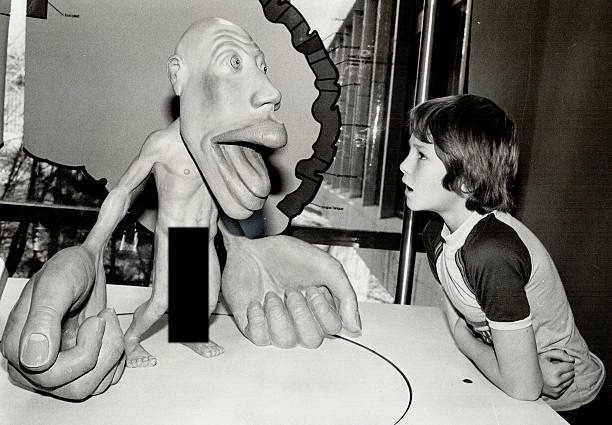
It’s time to return to our old buddy, the Sensory Homunculus. “Return to,” here is just a figure of speech; I’m not sure I’ve specifically mentioned our little friend here before. You’d probably remember him, because he looks like this:
Kill it! Kill it!
What is that… abomination? The sensory homunculus (and its close relation, the cortical homunculus) is a representation of the space our brains use to run different bits of our body via the nerves1. As I’m sure you’ve noted, the hands are bigger than the rest of the body combined. The right hand alone (the sculpture is of someone who is right-hand dominant) is the same size as nearly everything else in the body. When people compliment you by saying “You’ve got a lot of nerve!” they are talking about your hands specifically.
I’m interested in this little dude not just because I find it entertainingly horrific but because the implications are fascinating. The priority that our brains assign to our hands, and by extension, the things we do with our hands, may be incredibly helpful in explaining a great number of things, some of of which are my perpetual bugbears: why self-improvement can so hard to put into action, why it’s so easy to get distracted on a digital device, why we fidget, why fidgeting can improve concentration, and why we can’t put down our bloody phones.
As in, the phone you’re probably reading this article on.
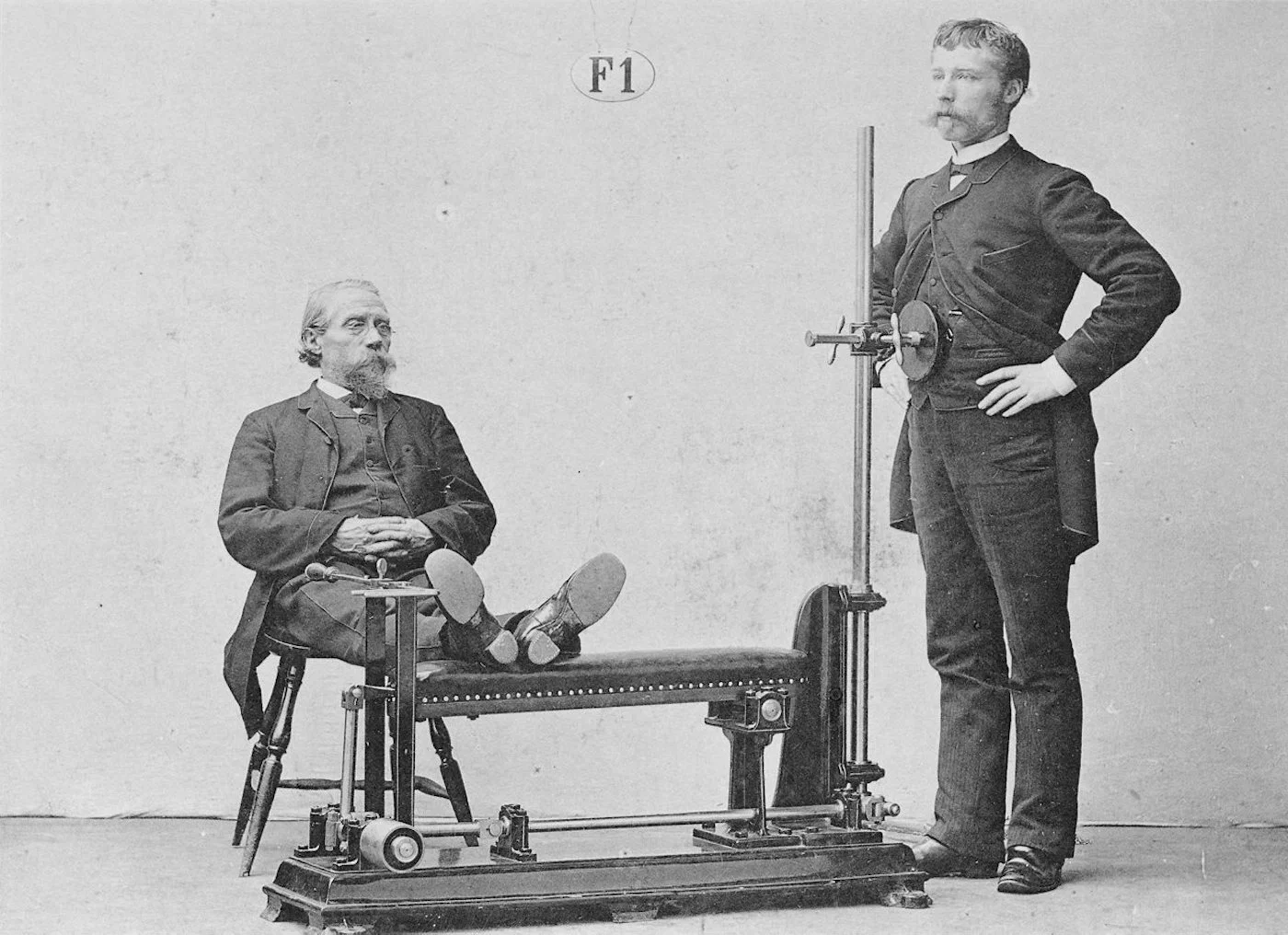
There is a field of philosophy that intersects with neuroscience called “embodied cognition.” The idea is the mind-body duality is a lie; they’re actually all one piece. Physiologically this amounts to less a theory and more a hard truth, one that’s easily observed if you sever the spinal cord, or cut off a limb. Your brain, body, nerves, muscles; everything is intertwined. Embodied cognition argues less that cognition requires a body, and more that cognition is a body, and that it’s rather silly to speak of cognition without it. I like this theory, not least because it’s another nail in the “OMG AI is going to become sentient any financial year now” coffin.2 And to me it’s another reason why relying on AI can be so dangerous, as doing so delivers the cognitive impact of playing rugby against a brick wall.
I shouldn’t spend too long on this, although God knows I’d love to; here is the Wikipedia page on embodied cognition if you’d like to do some further reading. My point is this: your hands aren’t just connected to your brain. Your hands are your brain. Kind of! With some obvious and quite important caveats! Like if you lose your hands you can live, but if you get Marie Antoinetted you can’t.
Put it this way: If you’re using your hands, you’re using some big chunks of your brain. And those chunks are connecting to other chunks, and it’s possible that all these brain bits3, working together, mean you might have an easier time doing what you’re doing, or continuing doing whatever you’re doing.
I think this may be why I had such an easy time sketching my dungeon diagram compared to when I was trying to lay it out via computer software. There’s one less abstraction layer; doing it in a tactile way just made more sense to my body. I also think it’s part of what keeps us so tethered to our phones in particular. Apple’s greatest triumph – soon shared by the rest of the tech world – was creating technology that you caress to make it work.4 The brain-space devoted to Hand Stuff combines with all the tricks learned by the unholy combination of television, psychology, social connection, videogames, and gambling to create a device that’s almost literally unputdownable.
Because our lives are governed by malicious deities of irony, a fact I’ve long respected, you won’t be surprised to learn that while I was mulling all this over I scrolled across a video essay saying almost exactly the same thing only more coherently, which I’ve posted below.
Given what seemed to be accumulating signs that I should, I have returned to writing. As in, handwriting.
No, I didn’t write this article by hand. (It’s too hard to embed the YouTube videos.) But I have made a point of handwriting notes again, and after struggling with a manuscript for a long-stalled fiction project, I’ve started writing it by hand too.
Sophia Vinci-Booher says [the] findings are exciting and consistent with past research. “You can see that in tasks that really lock the motor and sensory systems together, such as in handwriting, there’s this really clear tie between this motor action being accomplished and the visual and conceptual recognition being created,” she says. “As you’re drawing a letter or writing a word, you’re taking this perceptual understanding of something and using your motor system to create it.” That creation is then fed back into the visual system, where it’s processed again—strengthening the connection between an action and the images or words associated with it. It’s similar to imagining something and then creating it: when you materialize something from your imagination (by writing it, drawing it or building it), this reinforces the imagined concept and helps it stick in your memory.
I’ve talked before about how alarming I find the memory loss arising from parenting-related sleep deprivation, and this might be one way to stave it off. Also, I wasn’t happy with my handwriting. Over years of prioritising typing, my writing had degraded to a kind of sine wave with an occasional spike, like the reading on the heart monitor of someone who is about to die tragically in a hospital show. So I’m writing the first draft of my book and all my notes in cursive, which I never learned properly, so I can finally like how my handwriting looks.
This sort of thing has worked well for me in the past. About halfway through my second year of university I taught myself to touch-type while pulling an all-nighter because I wanted to spend the following day snowboarding.5 It was very slow at first but by the morning I was having some quite interesting auditory hallucinations and I could touch-type. I’m not doing any all-nighters this time but I’m already finding an enormous improvement in my cursive after only a few days.
There are other benefits as well. This morning I put thirty minutes aside for manuscript writing/cursive practice, and I found something interesting: the writer’s block6 I’d had for a long time on this specific project completely went away. Why? Because instead of agonising over the prose and editing as I went, I was instead agonising over the shapes of the letters. The writing just kind of wrote itself; it was the least I’ve self-edited in years. I timed myself and to my surprise, I found that after thirty minutes I’d written more than four hundred words.7
Oh, and I didn’t look at my phone the entire time I was writing. I didn’t even feel tempted to. Given that smartphones give me itchier fingers than smoking ever did, this is a real achievement. Like so much else, this is obvious in hindsight. Of course it’s hard to write on the Infinite Distraction Machine! What else did I expect?
On that note, here is another video that clicked with me for… reasons.
Whether you watched that weird little video or not, do start a creative project. Acquire a hand loom and become a neo-Luddite. Do an upsetting drawing of a cat. Join the Butlerian Jihad. Write the furry fanfic you’ve always wanted to write.
Just make sure you use your hands to do it.
Then use your computer or phone to leave a comment and tell me all about it.
It’s not a perfect representation, of course – the homunculus is for illustrative purposes only. As the article says: “The amount of cortex devoted to any given body region is not proportional to that body region’s surface area or volume, but rather to how richly innervated that region is.” And I understand several of those words, which means I’m obviously qualified to be writing this article. ↩︎
At this stage stage you could convincingly argue that it’s more nails than coffin. ↩︎
Sorry for all the neuroscience terms like “brain bits.” I can’t help my enormous vocabulary. Also, all the mistakes in this article are there on purpose to upset all the neuroscientists that I’m close friends with. ↩︎
I am in my 40s, so it is time to talk about my neck, my back. Most specifically my back. Not the other things. IYKYK.
I had an injection in my spine a couple of months back. Needles to say, I didn’t enjoy it. There was a local anaesthetic or I probably would have leapt clean through the CT scanner, trailing a hypodermic and a grimly-clinging doctor, but I could still feel the needle scraping along my hip-bone. Just because there’s no actual pain doesn’t mean there’s no sensation, and there is a lot of pressure when that big needle sinks in the eight or so centimetres it needs to go to curve around your spine and into the bit that has arthritis, apparently.
I’ve never had consistent lower back pain until this year, when it got quite bad to the point that it was travelling down one or more of my legs. I visited an escalating chain of doctors until the specialist said I had arthritis in one of my vertebra. Fun! He said there are two ways you can get this sort of thing: by doing too much work or sitting on your butt too much. I am in the latter category; my career of chair-based keyboard-punching has set me up nicely for an arthritic arse. Potential treatments: nothing, a CT-guided injection in the spine which – with an uncomfortable degree of ambivalence, the doctor said “might help” – and surgery that he simultaneously said he was happy to do and did not recommend.
I chose the middle path, and went with the injection.
Did it work? Well, it definitely did something, and by that I mean “it gave me a one-week migraine.”
I haven’t had a headache like that before and I hope not to have one again. I do get migraines sometimes but not like this: the only thing that could touch it was specialist migraine medications called triptans, and they just kind of gave it a gentle caress for an hour before ushering the headache back in. Other painkillers bounced off it like popcorn thrown at armour plate. Apparently this is common with needles in the vicinity of anything that has cerebrospinal fluid? No-one told me until afterwards.
The back pain did eventually settle down, which was possibly the steroid injection doing its work, but the doctor had warned me that it’d be temporary, and last week it flared up again. I briefly considered hopping on the specialist carousel again, thought “bugger that” and visited an osteopath.
The thing osteopaths would like you to know is that they are not chiropractors. This was enough for me; I despise chiropractors, and I decided against looking too hard into osteopathy lest I find something I didn’t like. There is lots of stuff that osteopaths (and physiotherapists for that matter) do that is… contested, I suppose, but at this point I was sore enough to leave my scepticism on the hook. I figured at the least I’d get a good back rub.
I did. It was the best kind of back rub: the kind that good-hurts so much it felt almost religious. I also got some advice that seemed both wildly impossible but turned out to be great and that has actually fixed me up better than anything else.
I mentioned to the osteo that I wanted to get my back sorted so I could start weightlifting again – I stopped the gym because the baby had me sleep deprived so much I worried I’d fall asleep on the bench-press – and she said “you need to stop bending over.”
I said that wasn’t very likely because of all the kids lying around my place that seem to need picking up a lot of the time, and she explained that no, I need to stop bending over, and suddenly it made sense.
I’d been picking things up the way most of us do it, which is bend at the waist, legs straight-ish. Sometimes I’d do a funky ballet-looking move where I’d bend over but stick out my left leg (I am not sure why. Balance?) The fact that my back screamed in pain when I bent from the waist or spent thirty minutes looming over my daughter’s crib and patting her back so she’d fall asleep hadn’t really been registering. I needed to bend over, so I did it.
Except I didn’t, and neither do you.
There’s another way to get things off the ground and it’s popping a squat. But, as the osteo explained, if you have bad form while squatting (and then loading up with a weight, like a bar or a squirming almost-two-year-old who is about to play a game of What If I Lunged Forward Really Hard, Like Fully Leapt Out Of Your Arms, Just To See What Happens?) and go down with your weight on your toes, your spine is still getting involved. The muscles around your spine aren’t particularly big, and loading a flexible structure where each component is the size of a curled finger and whose primary purpose is to house a bundle of extremely sensitive nerves with the full weight of your upper body is a bad idea.
Instead, you can delegate the job to the largest muscle in your body; your gigantic, under-appreciated ass.
Anyone who’s been given the unhelpful advice “lift with your legs, not your back!”1 – this is what I’m talking about. Except it’s more like lifting with your ass – your posterior chain, really. It’s how you lift at the gym, because it’s how you have to lift at the gym if you don’t want your fellow fitness enthusiasts to hear the faint pop and screams of agony that come from a vertebra imploding during an improperly-done squat.
In gym-language, they call it “lifting with good form.”
To lift with your ass: from a standing position, keeping your back straight, you begin by sticking out your ass in a comical fashion. This is called the hip-hinge. As your hips go back you sink groundwards, with your weight on your heels. Picking up the thing works in reverse fashion; weight a bit more on your heels – the instinct will be to go up on your toes, don’t – and use your tremendous ass to head back up.
What’s weird about this is that if you’ve never done it or haven’t done it for a while you won’t know what muscles are working and it can feel very weird. This is because of a lack of proprioception, which I’ve written about before; it’s essentially the interior knowledge of what the different bits of your body are up to. Unfortunately nerves and muscles can be forgetful, and if you live in your head a lot and type for a living it’s only natural that your ass stops remembering where it is and that it’s intended to do more than sitting.
I have been doing these very intentional lifts very assiduously for a few days now whenever I need to pick up toys or boxes or a rapidly moving toddler on one of her several thousand daily attempted trips down the Forbidden Hallway where the Interesting Electrical Switches are, and the improvement has been absurd. Something in me likes moving this way, in the same way that I liked weightlifting; instead of the snarl of agony I’d been ignoring when I bent from the waist, I get a “hey, that was interesting. Do it again.”
So I will. And hopefully a return to the gym is on the horizon.
Want to try the hip-hinge, aka lifting with your ass? Here is a video, which is also a free and extremely good fitness regime if you feel like following along.
Where have I been, by the way? Busy! I’m working on a project that’s taken up pretty much every spare bit of mental energy that’s not reserved for client work. If it works out – and my mental Magic 8 Ball is set to Signs Point To Yes, I won’t say any more than that – I will be well beyond stoked and you’ll be hearing from me a lot more often. Which would be nice! I like writing things for you guys. On that note, please leave a comment. I like those even more. Talk about your neck and your back if you like. Not the other ones.
An earlier version of this post had this bit backwards. “Lifting with your back, not your legs” is what I was doing and it’s wrong, in case the rest of the post didn’t make that clear. ↩︎
A few years ago I did a blog bit where I’d publicly apply for jobs while determinedly misunderstanding the job description. I’d apply for jobs like “scrum master” and talk up my high school rugby experience. I also applied for a job at British American Tobacco by dressing as a giant cigarette and asking teenagers to take up smoking. It was fun, but after a few I got bored and doing things like dressing as a giant cigarette was intersecting uncomfortably with my need to actually apply for jobs. So I stopped.
Today, job applications are back on my mind. I am spending entire minutes in the mind-melting hell of LinkedIn before getting upset at the spectacle of endless employees praising the AI leopard that their employers have hired to eat their faces. There simply aren’t many jobs out there for anyone who isn’t willing to sing paens to a technology explicitly designed to replace people. In between, I see the world’s most confidently stupid business enthusiasts opining about things like how we must dig for more fossil fuels to maintain “energy independence” – evidently their feelings tell them fossil fuels aren’t finite – and blaming renewable energy for the current energy crisis, which is as close to a Bizarro World take that it’s possible to have outside of a comic book. (If you’re wondering, the crisis is because we depend on fossil fuels, which is in turn because oil companies worked very hard to make sure we didn’t switch to renewables.)
So I’m back to the public job application, except this one isn’t a bit. There might be the occasional joke here and there but I’ve never been more serious.
I sent the email a few minutes ago, and now I’m publishing it here. I really hope they take me on.
Gidday!
I am writing to apply for the job of Curator – Private “End of the World” Library at Westhaven Estate.
This open cover letter is to demonstrate my extraordinary suitability for this unprecedented role. Firstly, you mention that you’re after someone intellectually curious. That’s me, to a T. I am so intellectually curious that I’m curious about what intellect even is. There’s a lot of that around at the moment with folks pretending that computer code is sentient: it’s become the world’s most boring sport on LinkedIn. Even more importantly, you want someone to “help design and build a private, long-term library on a remote coastal estate in New Zealand.”
I am so prepared for this it’s terrifying. I have spent on average at least one hour of each day of my life thinking about how to design an apocalypse library. I had always thought that these cumulative years were wasted, but now?
It seems like fate.
You say: “The project is to curate a high-conviction, enduring collection — a library that would remain meaningful and useful under extreme long-term scenarios.“
You guys! I am so here for this!
As I mentioned, I have given this some thought. So let’s get some assumptions out of the way, so we don’t make an ass out of u (or me). To avoid an ass-u-me scenario, I have a few questions for you, starting with:
What sort of end-of-the-world are you looking for your library to survive?
Robert Frost (good collection candidate imo) said that “some say the world will end in fire, some say in ice.” I say: he would say ice is great and will suffice, with a name like Frost. But the nature of the world-ending event is very important to the nature of the library.
Let’s say you hold with those who favour fire. Nuclear war, maybe. It’s a good consideration! We do have all these city-burning weapons and an errant flock of geese or Tweet could easily kick off World War Three. It’s the most probable near-term apocalyptic scenario.
If this happens, your library will be invaluable. Paper, commonly used to make books, is a wonderfully extensible material. For one thing, it is flammable (c.f. The Day After Tomorrow, one for the End of the World DVD collection.) All those books will make great fuel for one lucky roaming band of irradiated miseries who will enjoy a useful supply of kindling after – assuming you didn’t already make an abrupt transition from biology to physics via a nuclear fireball in one of the world’s freshly obliterated cities – you have been killed and your supplies eaten. They’ll be very grateful to you! Your library will be fondly remembered for weeks to entire months until everyone is dead of acute radiation sickness, cancer, or starvation.
If you want knowledge to survive this scenario, into a future where radiation-proof Morlocks are reclaiming humanity’s lost wisdom, you’ll want something more permanent than paper. Your options include fired clay tablets (they’ve stood the test of time, which is why we know about crooked copper merchants from 1750 BC), stainless steel, or titanium. You’re going to need quite a few metric tons of it, and a lot of storage room. You might want to get to work hollowing out some local mountains, or digging a very extensive basement. You’ll also have to choose between print via embossing or debossing. My pick would be laser engraving; it’s the fastest method I can think of to get writing on to metal.
That does raise another important point.
How long into the end of the world are we talking here? Like, do your hypothetical post-apocalypserinos speak English? Are they even human? That’s an important question! An English library is no good in a far-flung future where language will almost certainly have evolved into something completely different: it’s why you struggle to read the original text of Beowulf (good inclusion imo). So if you’re wanting to include “essential knowledge, foundational literature, practical survival and technical domains, philosophy, history, and culture” you are better off not actually printing it in English. (Sure, have some English books kicking around, it can’t hurt – again, choice of medium is important, you’ll want to print on something durable like vellum as a modern hardback or paperback will crumple into moldy unreadable dust within a scant century or two given modern print materials and techniques unless you have very good humidity control and an excellent and implausibly long-lived air-conditioning system.) Instead of English writings, you’re going to want a codex with an included key. Think along the lines of the Golden Record, by Carl Sagan, which adorns the side of the Voyager probe and is currently somewhere in the vicinity of the heliopause. A lot of instructions and meaning can be conveyed this way; you’d be after something like the codex that the advanced aliens in Contact (also by Carl Sagan; definitely include Contact, great yarn) send in their Message to Earth.
Next point? Location, location location! I’m sure you know all about this in the real-estate sense: you have after all dropped twenty mil on a quite nice bach. But your library needs more in terms of location planning than stunning private coastal views and sea breezes. I hate to be a downer, but Westhaven might not be the best location for it. (Consider my town of Morrinsville instead: it is the closest thing this country has to a tectonically inert flood-and-tsunami-proof location and it could do with a tourist attraction that isn’t a giant fiberglass cow.) First, as the name would suggest, it’s on the West Coast of the South Island New Zealand. That means it’s within cooee of an Alpine Fault rupture which is more geologically overdue than a 12-month pregnancy. I checked the fault map and while there aren’t any known faults where you are, that doesn’t mean much: the whole country is essentially one large faultline and that’s especially true for the Alpine Fault. When that baby pops the entire Southern Alps are going to jolt upwards by several metres and every scenic hillside residence for a hundred kilometers or so on either side is going to be kicked into touch. Your library will come back with snow on it. Or, less poetically, just slide ungracefully into the ocean, like a prop forward scoring one of those boring British tries.
Speaking of the ocean: The west coast sea breezes are better described as a constant howling gale, and this incessant scream carries a lot of moisture. Unless you like mould more than JK Rowling, this is not ideal for a library. The ocean is important for other reasons. Take a look at the New Zealand map: see how the West Coast is all smooth and the East is all jagged? That’s becaus the ocean is eating the West Coast at a pretty brisk clip. Which brings us to climate change! Rising oceans, groundwater tables, and even faster erosion from extreme weather events will all nudge your library towards inundation, which is less than ideal. There are all sorts of potential locations for libraries but none of them are underwater.
Another issue I think you’ll face is that books are completely useless without stuff. You are going to need a fully-fledged workshop adjoining your library, with either some very long-life batteries, or instructions for setting up a lithium mine. In fact, this is going to be your greatest challenge. Knowledge is useless without an extant culture to produce the technology through which knowledge can be applied. A common post-apocalyptic fantasy is a bunch of sword-wielding barbarians stumbling on a surviving library (they are literate, of course) and re-inventing heavier-than-air powered flight shortly thereafter. That can’t actually happen. By way of example, there’s a bloke who – inspired by Douglas Adams, good inclusion imo – tried to make a toaster from scratch. It worked, eventually, with much cheating, and a total disregard for electrical safety.
If you want your post-apocalypse library to endure, you’re going to need people. And the best way to make sure there’s people is to make sure the apocalypse never happens in the first place.
Unfortunately, if we carry on the way we currently are, it’s going to!
I am not talking about AI. The odds of a future predictive text bot taking over the world are as good as they are for a current predictive text bot, which is to say, pretty much zero. But spending money on bullshit like AI instead of on more important things, like stopping climate change? Yes, that could actually kill us all! Climate change is a bomb that’s already detonated, and the slow-motion explosion is equivalent to five Hiroshima-sized atomic explosions per second, according to the Bulletin of Atomic Scientists (best get their bulletin in your library imo).
It gets worse. This following is more important than anything so I’ll give each bit its own line and sentence:
Growth.
Must.
End.
Why? If growth stays coupled to energy use – and, so far, it always has – then we are cooked. I mean that literally, not figuratively: if the economy continues growing at anything like the approximate current rate of three percent increase per year, within a scant 400 years we will be using “as much energy as the Sun provides to the entire surface of the Earth annually.” (Becker, Adam, More Everything Forever, 2025, definitely include imo.) Unfortunately that level of energy use will come with side effects, such as, uh, boiling the oceans.
Again, I am not being figurative. If growth doesn’t stop, no matter what energy source(s) we use, we are literally cooked. Do the maths, if you like: I’ll wait. (Good idea to include a few maths textbooks, maybe some physics too imo.) Looks like those that favour fire have it right.
My point is that your “end of the world library” won’t be up to much or last for long if the world does actually end within the next several centuries, and on our current trajectory, it absolutely will. To illustrate this last point point, I will take the liberty of quoting from a volume that should be in the audio-visual bit of your library, imo: James Cameron’s 1997 masterpiece Titanic.
“But this ship can’t sink!”
“She’s made of iron, sir. I assure you, she can. And she will. It is a mathematical certainty.”
You may feel my assertion (mathematical certainty) about our constantly escalating energy use turning the planet into a very large crematorium is hyperbolic, or unfair, or any number of things.
To this I say: the facts of physics do not care about your feelings.
They do not care about your library.
But there’s some good news.
It’s you!
You are rich. Luck, or fiscal enthusiasm bordering on pathology, has blessed you with more resources than 99 percent of the global population. If you can afford to shell out $20 million on a luxury lodge plus however much more on an apocalypse-proof book collection, you can put that money to good use, chiefly lobbying. Lobbying for what? The very opposite of what most rich, powerful people lobby for: armament reduction, fossil fuel reduction, climate change mitigation, and sustainability; the end of cancerously endless economic growth and its inevitably deadly energy use. You can help prevent the end of the world. You can be a force for good that ensures that in a few dozen or several hundred years or even later there will still be a need for libraries, because there will still be people to make use of them.
Maybe the real end-of-the-world library is the civilisation we made along the way.
I eagerly await your offer of employment.
Sincerely,
Joshua Drummond
P.S. My CV is attached
P.P.S. You can put this letter in the library if you like.
Thank you for reading. Constructive criticism on my approach to employment is very welcome in the comments:
In the event you would like to give me a job, or a contract doing something useful, the following page has a non-exhaustive list of the stuff I can do:
There’s this little aphorism that I’ve heard floating around: “knowing is half the battle.”1
I don’t think it is.
When it comes to self-improvement, I think it’s assumed that knowing is at least 50 percent of the battle. Perhaps more. What else are the books for? They’re to fill you up with knowing and then all you have to do is some (often somewhat unspecified) battling to sort your life out.
These days I wonder if this is even slightly true. Knowing seems a maximum of ten percent of the battle, perhaps much less. For instance, I don’t think my life would be much worse if I had never heard the phrase “executive dysfunction.” Sure, it gives me a term, a shorthand, for “why the flipping heck am I not doing the gosh-darn thing that I cannot stop thinking about”2 but that’s just a slightly more efficient form of frustration.
I wonder if this is the source of my combined bugbear with relatability, the prevalence of memes, and therapy-speak in the ADHD community. Yes, thank you, billionth executive dysfunction explainer video in my timeline, but does this really help? I run into the same issue with political awareness content: is it actually useful to know that the world is all flipped up, without explicit instructions following on how to unflip it?
For irony’s sake, here is the exact kind of video I am complaining about. I found it very relatable.
I am kind of done with new names for old frustrations. I know what procrastination feels like; I can summon that flop-sweat sensation at will. What I need to learn is what it feels like to shift out of that mode, to understand what specific switches got flipped, to map the terrain as I go so I can backtrack and do it again next time I am caught in a spiral.
We all know what flailing feels like; doomscrolling, Netflix surfing, snacking, whatever form avoidance takes. We need to find a way to remember, to embody, doing the stuff we want or need to be doing.
I am not sure if this is making sense so I’ll change tack. I like to interrogate the aphorisms I write about so I searched for “knowing is half the battle,” expecting some kind of lineage from “knowledge is power” (France is Bacon) or something like the Art of War or Meditations by Marcus Aurelius.
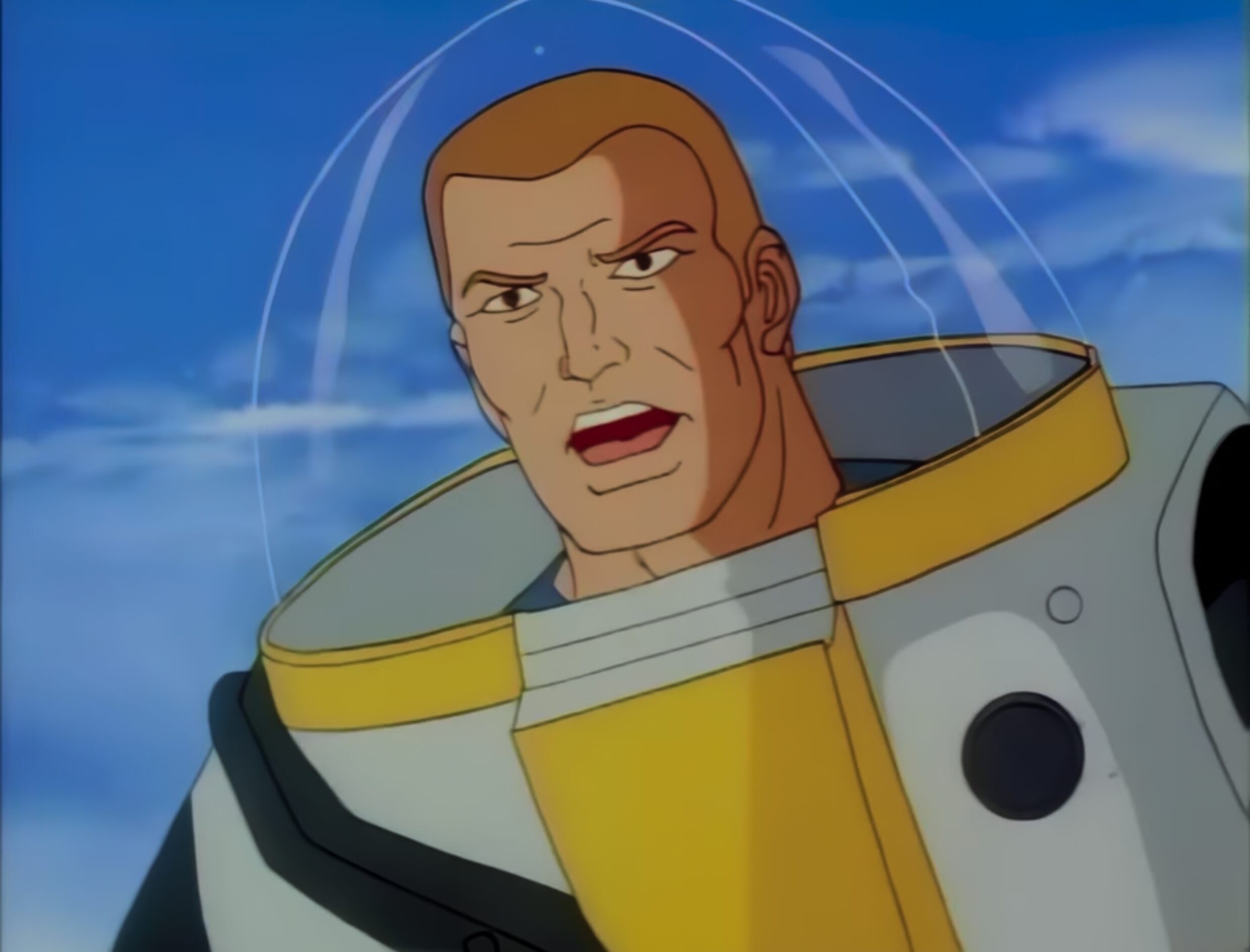
It’s from GI Joe.
“Now you know, and knowing is half the battle” is the catchphrase from the little safety PSAs that followed GI Joe cartoons.
The more you know.
Possibly everyone knew this except me. I wasn’t allowed to watch GI Joe as a kid – either for demonic or financial reasons, I’m not sure which – so I don’t know where I picked it up from. Pop culture osmosis, maybe?
Anyway, that reminded me of the Fenslerfilm GI Joe PSAs, which were doubly funny to me when I watched them because I had never seen the originals, and I was stoned out of my gourd. University!
The remixed PSAs are 24 years old now. We’re flipping old, you guys! So old! And our rest homes are going to be so weird. They’ll be playing these things to dementia patients and watching their eyes light up like it’s Mozart.
I had intended this to be a shorter post followed by a digest of some of the stuff I wrote about last week, but I’ve gone long. Here’s the stuff anyway! Four articles for the price of one! (My writing is free.)
Also! Here’s a link to that podcast I make with Emily. People have been getting in touch to tell me it’s good, which is probably a good sign?
Thanks, as always, for reading. And listening too these days, I suppose.
Now, comment! I want to know if you knew about the GI Joe thing or if it just percolated its way into pop culture and we’re all going round quoting a cartoon designed to sell plastic dolls to boys like it’s some deep profundity.
What should a new aphorism be called? A neoaphorism? We must continue the research. ↩︎
Sometimes bits of my brain that had deep grooves carved by my evangelical upbringing switch back on unexpectedly and I find myself using swear-word substitutes. I have decided just to roll with it. ↩︎
A lot of folks with ADHD have a thing they call “rejection-sensitive dysphoria.” In the olden days we would have called this being a sensitive wee sausage. RSD is a bit of a meme in the extremely memetic world of ADHD-posting, and it tends to activate my annoyance with overly-medicalised terms and engagement-driven relatability that doesn’t offer much in the way of solutions.
Whatever we call it, the term doesn’t quite capture the feeling of the “everyone hates me” anxiety that burns so hot that it’s sometimes almost impossible to leave the house.
I have/had it pretty bad, to be honest. It can be an awful closed loop; you’re oversensitive to inputs; you overreact, that causes people to treat you with a bit more real or imagined side-eye, you notice, the loop tightens. I’m very aware of it and yet I still let it get me. Just recently I put off following up on a job because I had managed to imagine a very detailed scenario where the recipients of my email hated me (reasons unclear). I did eventually follow up, reasoning that if the world blew up then it wouldn’t matter if they were pissed, and it turned out they were busy and hadn’t seen my email. Because of course.
Things like this make it all the more important for people who suffer from RSD to have an offset. Some kind of collection of all the nice things people have said about you which you can turn to when you’re feeling the RSD pinch. Which, naturally, I have never really had.
A pivot to business: I am forever telling my clients that it’s vital to capture customer feedback in the form of testimonials and case studies. Why? Because your biggest single selling point what other people say about you.
I suspect the reason many shy away from this is because we almost all get some amount of RSD. Reaching out for feedback can be nerve-racking.
But if you don’t do it, people don’t say things like this:
We’ve been delighted with our Marketing support from Two Ruru.
Josh hit the ground running. He understood our business, the terminology we use, the customers we serve. We’re able to provide rough inputs to Josh and he turns them into well crafted and relevant outputs, suited to the various modes of communication we use.
Our transition to HubSpot CRM has also been assisted by Josh as a by-product of his engagement. He created our new website using HubSpot as the underlying platform, got us up & running with direct email messaging from HubSpot, which also required us to get our data in order and segment customers. We’re streets ahead of where we were with our HubSpot evolution.
There’s also a bit of icing on the cake. Josh is the Master of Case Studies. We’ve done our first one with him, and it will be used for many any different purposes and shared with several key stakeholders.
And a cherry on top – Josh is great to work with!
So there you have it. Apparently everyone isn’t annoyed at me all the time, which is a bit of a narcissistic the-world-revolves-around-me thought, now I think about it. I am going to ask a few more folks for things like this, which will help me build up my business (and when the feedback isn’t so good, it will help me improve, which is the point of all this!) And it’ll help with the RSD too.
Oh, and if you’re in business and you need someone to do stuff, check out my About page, where I have a non-exhaustive list of all the stuff I can do.
If you’re not in business, consider flinging me a few dollarydoos here and there. It all helps.
Here’s how to support this newsletter!
Subscribe to free posts:
Become a Premium Newsletter Subscriber using the Big Blue Button below and get paid-only updates in your email + access to high-res digital downloads of all my artwork + other cool stuff!
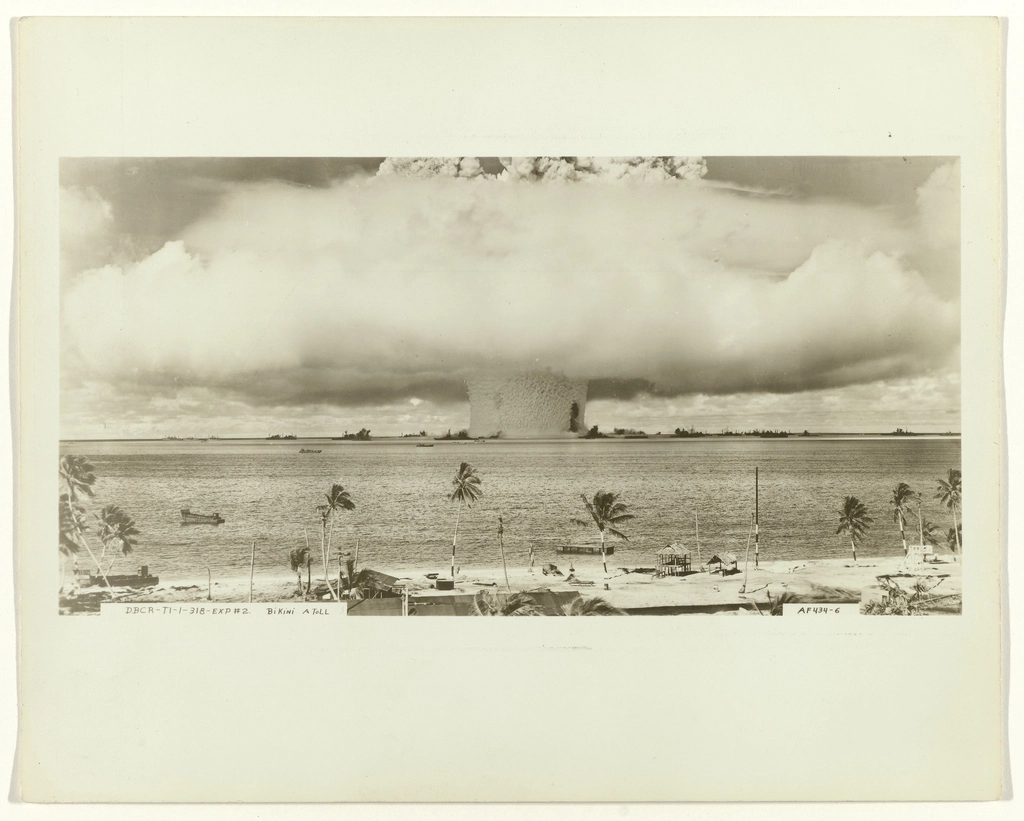
But it could still end tomorrow, depending on what whispers the Mad King hears (real or imagined) that cause him to thumb a button in a fit of demented pique.
I’m a bit over it, honestly! I suspect we all are! Some of us would like to get on with our drinking water problems and go for walks with the kids without the threat of global thermonuclear war or even just the wanton unprompted murder that we’re all somehow used to now.
Good news: we could sort it all out. We could do it today. Here’s a piece in which we do just that and the hideous Wendigos who run the world finally get their just desserts.
A Two Bedroom House
The next new rule was: You first. Guy wants to start a war? Go for it buddy. Go duel the other guy who wants to start a war. You get a knife, each.
An excellent online acquaintance messaged me about some health stuff the other day, and the strange tension of living with unprecedented and difficult issues whilst also dealing with the everyday mundane. “Birds chirping in the yard, you still gotta put the bins out,” they said.
Doesn’t that just sum up what it’s like to live in the world right now? The Mad King with the Power to End All Life has issued one of his terrifyingly vague Truths, and tomorrow, we get to find out if the world ends, or if it’s just the more usual kind of murder with bombs. In the meantime, I have the kids at home on holiday, keen to play all hours of the day, client work to sort out, and I really wish I could get on top of this strange issue I have with water.
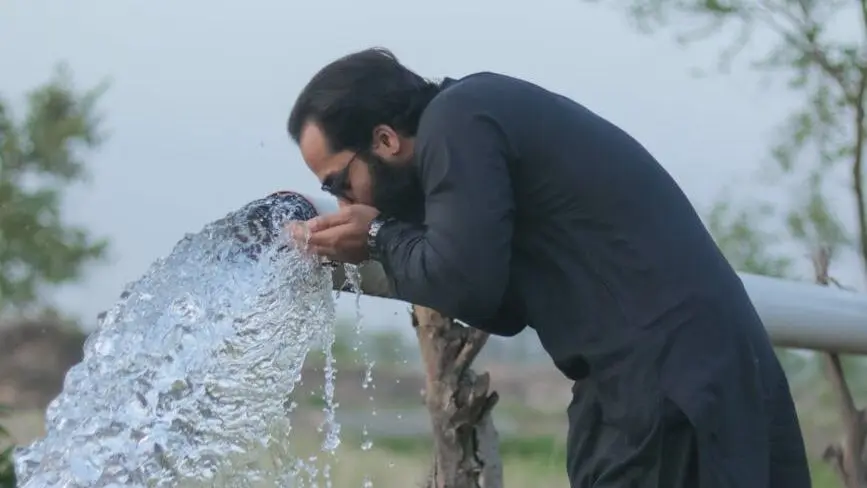
I am hydrophobic.
I don’t know why, but unless I’ve been exercising heavily I don’t really get thirsty. I can quite easily go an entire day where my entire liquid intake is the two coffees I let myself drink. Obviously, this is not good for me, and while I don’t get thirsty properly I do suffer the predictable effects of not drinking. I get grumpy and cloudy-headed and headachey, and occasionally some kind of physiological switch will flip and I’ll wake up at 2 AM with a suddenly raging thirst.
Look at Samson. I bet he never didn’t want to drink water.
And what’s weirder is that I don’t want to drink water. I don’t know why! Objectively, I like water! It keeps me alive! But I’ll look at a full drink bottle or glass and a perverse bit of brain will go “yeah, nah,” and just kind of steer me away from it. I just checked and there is indeed a nearly full drink bottle on my desk. It’s been there all day. It’s a rare day where I actually manage to finish anything close to the recommended amount of water.
Perhaps I have a case of Mild Rabies. Or maybe it’s an autism/ADHD thing. Apparently folks who land somewhere on the autism-ADHD continuum can struggle with interoception, the ability to feel and understand the body’s signals; and lack of thirst (or excessive thirst) are common enough among autists that there are a bunch of people posting on Reddit about it. My brothers both get it too. It’s odd. And I’d like to get on top of it.
So that’s the plan for tomorrow. Remember to put out the bins. Try not to get lost in the endless terrible news. Keep the cat’s litter clean. Try to work towards a world where evil narcissists aren’t handed the power to destroy all human life. Drink enough water.
Become a Premium Newsletter Subscriber using the Big Blue Button below and get paid-only updates in your email + access to high-res digital downloads of all my artwork + other cool stuff!