Category: Art

  • Little victories

    Little victories

    In days of yore, before the Great Enshittification, companies offered perks to their employees. You see, in these Before Times, the great Slow AIs – those ponderous, long-lived, infinite profit-printing machines – had not yet declared their desire to replace all their human employees with Fast AIs, and as such it was decreed that they should keep their living, breathing, meat-stuffed cost-centres more or less happy. To do this, they gave us Perks. And when I worked for New Zealand’s largest telecommunications company, which shall remain nameless and trades under SPK on the NZX, they let us eat cake, and pizza, and they gave us a Christmas present each year and a cool $150ish of phone credit a month, which meant every employee toted the latest Phone that is Smart.

    (Early warning signs were when they reduced the monthly phone credit to something a lot more paltry and replaced the Christmas bonus with the company logo on a circular beach towel – riches, I’m told, compared to what they’re offering now, which is “a job, but only sometimes.”)

    Another of the things this great company1 did is put on little events to rev us all up a bit, the better to extol the virtues of the Brand. Their main marketing dude – who I would later witness during one of company’s increasingly frequent rolling redundancy rounds skulling an improbable quantity of beer out of an expensive Italian shoe – commissioned an agency to make an ad, just for employees. It was called “[COMPANY NAME REDACTED] 2025” and it both ripped and slapped. It was a vision of 2025 which featured self-driving cars, implied climate change had been solved, and had those cool clear glass smartphones that are in all the futuristic movies and have never eventuated because they’d be awful. One of the slogans that accompanied the ad was “#littlevictories2,” hashtags still being relevant a decade ago. We were meant to look for the #littlevictories in our jobs, and this we dutifully did, even if our uptake of the hashtag was more ironic than anything else.

    I mention all this because #littlevictories has stuck around, for me. It was one of the better bits about my best corporate job to date at a company that, current employees tell me, is a husk. Everyone is checked out, withered by constant redundancies, bizarre business decisions, and executive bonuses that have been awarded for services to “making services worse” and “annihilating the share price.”

    You can feel the wheels coming off, can’t you?

    Well, goodbye to all that. For now. My job for the foreseeable is making an offline-first product to teach kids and adults how to draw, and to make a tiny mountain of art to promote it. I think a lot of artists are frustrated by having to make videos to promote their art, but I’m lucky, because I see the videos as the art and the pretty canvases produced as an enjoyable side benefit. So here is today’s #littlewin; my first long-ish form video in over a year, with more to come. Because that’s what I do now! I write essays like the one you’re reading and I turn them into art and videos.

    (The same rules apply as last time: you don’t have to watch this video, but if you do, please watch it until the end, and leave a Like and a Comment. And please do smash that Subscribe button; smash it until your phone screen splinters or your TV breaks.)

    This next bit is more of a #bigwin, but last week I asked everyone who was interested to alpha-test my art product to nip over to https://www.arti.ly/ and sign up. I have room for about 20 people in the first cohort and I was expecting about ten people to put their names down. I checked back after a couple of hours and there were more than 50 of you. Now, without any nudging, there are over 100.

    This is a bit mind-blowing. One of my main goals for the business – it’s literally in the business plan – was to get 100 people on the email list before week six. This was described by the investors, with some careful emphasis, as “ambitious.” Well, we’ve blown past that in week three. If anyone else wants to get amongst it, the link is below. I’ll be sending the first email tomorrow.

    Thank you, as always, for reading. And if you have any #littlevictories to share, or thoughts about either a.) the current corpoapocalypse or b.) any boltholes – mental or physical – you’ve managed to carve out from the emerging hellscape, I’d love you to give form to them in the comments.


    1. The company famously rebranded to a word that rhymes with “ark,” but before that was known as a word that rhymes with “elecom.” But I don’t want to say any more in case people figure it out. ↩︎
    2. Edit: an ex-[COMPANY NAME REDACTED] alum reminded me that the hashtag was actually #littlevictories, not #littlewins. I have amended the article. I regret the error, but only a little bit ↩︎
  • We have to go back… to the drawing board

    We have to go back… to the drawing board

    Imagine this: you’re a mere lad approaching his mid-40s with truly frightening velocity, and you’ve been handed a once-in-a-lifetime opportunity to start a business. An investment, even.

    And instead of doing something sensible, like getting into real estate or opening a local lawn-mowing franchise, you are making an art product.

    This is a problem because if you’ve been online lately and your algorithms have noted your casual interest in learning art, you cannot scroll more than ten centimetres without being targeted by ads for one of several million existing art instruction courses. It turns out that there are a lot of very skilled artists out there who, in a line stretching back through Bob Ross and Bill Alexander all the way back to the Middle Ages, want to teach people how to do art like them. And now, thanks to the internet, they’re all hawking their own online course.

    An art startup seems a bit silly now, doesn’t it? So why are you doing this?

    (It’s possible you’re not doing this, that it’s only me who has this very specific set of circumstances, so I’ll just drop the “you” for now.)

    I have so many reasons.

    I’ve been dreading typing this all up, to be honest, because… it’s a lot. You know how some folks will info-dump on you about their new interest? If you have ever been in audible distance of a middle-aged man who has discovered barbecues you know exactly what I am talking about. Well, this is a 25-year obsession trying to escape my brain all at once.

    Also I already wrote some of it.

    At the end of that post, I promised a part 2. That was several years ago. Better late than never! So let me get straight to the point:


    If you feel like you can’t draw, it’s because you were taught wrong.

    Or, even more likely, you weren’t taught at all.

    In my previous post, I wrote:

    Without training, or a rare quirk of neuroatypicality, [drawing] is like trying to do calculus without ever having learned how to add 2 + 2.

    So, if you’ve ever beaten yourself up for not knowing how to draw, you can stop. It’s a miracle anyone learns to draw at all.

    But, also miraculously, it’s almost certain that you can still do it.

    If you’re reading this, you can read. Well done! Reading is an enormously demanding cognitive skill. It takes years to learn and master. And if you understood my 2+2 metaphor, you can also add. Ka pai! Maths is hard, especially once you get past the intuitive stage (concepts like “less,” “more,” “a group of more than four things.”)

    So if – an adult, I’m assuming – can do hard things like “read” and “add” but cannot draw, why is that?

    In order to answer that, we have to go back.

    I’m going to assume you drew as a child. Nearly all children do.1 It is an almost universal behaviour, across different cultures and times. In fact, the ability to draw *recognisable* forms seems to be one of the things that is uniquely human, and children typically engage in it without having to be told, a bit like how they naturally pick up language.

    So why do we stop? Why did you stop?

    Let’s go back a little further first.

    The drawing behaviours of children go through recognisable stages. They typically start by drawing scribbles. Around age 2, these may start to coalesce into simple faces – eyes, nose, mouth (usually smiling.) This is the stage my daughter is currently in and it’s adorable. Later, children begin to draw their world. Mum, dad, brothers, sisters. Houses. Doors. Windows. Trees. Pets.

    Up until a particular age, children’s drawings are mostly two-dimensional symbols. You know what a child’s drawing of a house looks like; it’s the Playschool house, or (more recent reference) Peppa Pig. Children put spectacular effort into these drawings. They are often critical of their own efforts – I used to lose my mind when I coloured outside the lines. But, by and large, young children continue drawing. As you’ll know if you’ve ever tried to get a kid engrossed in a drawing to do anything else, it’s often hard to make them stop.

    Until they suddenly do.

    Around a certain age, typically from 9 to about 12 – often on the cusp of puberty, which I don’t think is a coincidence – children grow frustrated with their symbolic drawings. Motivated by either an innate desire or by cultural forces2, they start wanting to draw realistically.

    And they can’t. Not because they’re not capable of it. Because they’re not taught how to do it.

    This – the near-universal aspirations of children to develop realistic drawing and painting – is met with the near-universal inability of parents and teachers to help the kids do what they want to do.

    Because, more often than not, parents and teachers have no idea how to draw either.

    When children can’t do the kind of drawing they want, and no amount of effort seems to help, they – very understandably – quit.

    In effect, the desire to draw realistically forms a kind of developmental cliff-face; one that nearly every child falls off before they’re properly into their teens.

    Imagine if we allowed this to happen with reading or writing or maths. Imagine if every child who wanted to do science was told that there was no way to help them progress past basic addition. “Hey, don’t worry, keep trying, and maybe you’ll pick up calculus!”

    Learning to draw – which nearly all children want to do, and which is the bedrock of further art practice – is being left to privilege and luck.

    I don’t think that’s fair. And I want to fix it.


    I’m not having a go at teachers (or parents) here. Sometimes kids get lucky: a mentor does know how to draw reasonably realistically, and they manage to pass this on to the child in a way that works for them. Or the child has the kind of neurodiversity that makes them spend days, weeks or years on one hyperfocus, pushing past obstacles, seeking out their own resources, eventually finding a method that works for them.

    The latter is what we tend to call “talent.”

    It’s not parents and teachers’ fault if they don’t know how to draw because they were never taught; it’s just the perpetuation of a systemic problem. I maintain that if more people knew how to draw in even a moderately realistic way, more kids would learn how.3

    If you stopped drawing as a child, you may have some memory of why. A lot of the time it’s internalised as “I just realised I was no good,” or “My drawings sucked so I lost interest.” Or, much too often, it’s along the lines of “Someone told me my drawing was bad so I just stopped.”

    If you feel this way, and have ever wished you could go back in time to learn to draw – well, you kind of can.

    As I wrote before, most adults who currently consider themselves incapable of drawing because of this nearly universal low-key childhood trauma can still learn. And the purpose of my startup business is not to serve the over-saturated “courses for adults who already have some art skill” market. The goal is to teach drawing to adults who wish they’d learned how to draw as kids – and to give kids the instruction they need before they fall over the realistic-drawing developmental cliff-face.

    How to do that? By not just teaching the basics of drawing, but to make it possible for parents (and teachers!) to teach the children in their lives how to draw as well.

    That’s the plan. I could go on, and on. I really could. But I need to stop just talking about this stuff and actually make the product. For that I need guinea pigs. The kind with opposable thumbs and a desire to draw things.

    Could that be you?

    If it is, either reply to this post, or head to this hilariously basic website and put your email in the thing.

    It’ll be free for the first cohort, which will probably max out at around 20 people.

    Thanks, as always, for reading. I’d love to know what you think – your comments are absurdly welcome.


    1. Some do not, but this is quite rare, and usually relates to a developmental delay/disability or a neurodiversity like autism. That’s not to say that autistic people cannot draw; many can, and in fact a lot of what is thought of as “natural” drawing talent is probably just a form of neurodiversity that manifests as a special interest in making art. There is also a thing called “dysgraphia” which probably deserves its own post; it definitely exists, but because of the reasons outlined in this post I believe a lot of people who think they have dysgraphia have actually just been taught badly or not at all. ↩︎
    2. I don’t know which. I suspect it’s both. ↩︎
    3. I’m being a bit loose with the word “realistic.” Children don’t typically aspire to photorealism; I have wowed classes by drawing a very rough “realistic” eye on a whiteboard. ↩︎

  • Moby Duck: How to Buy

    Moby Duck: How to Buy

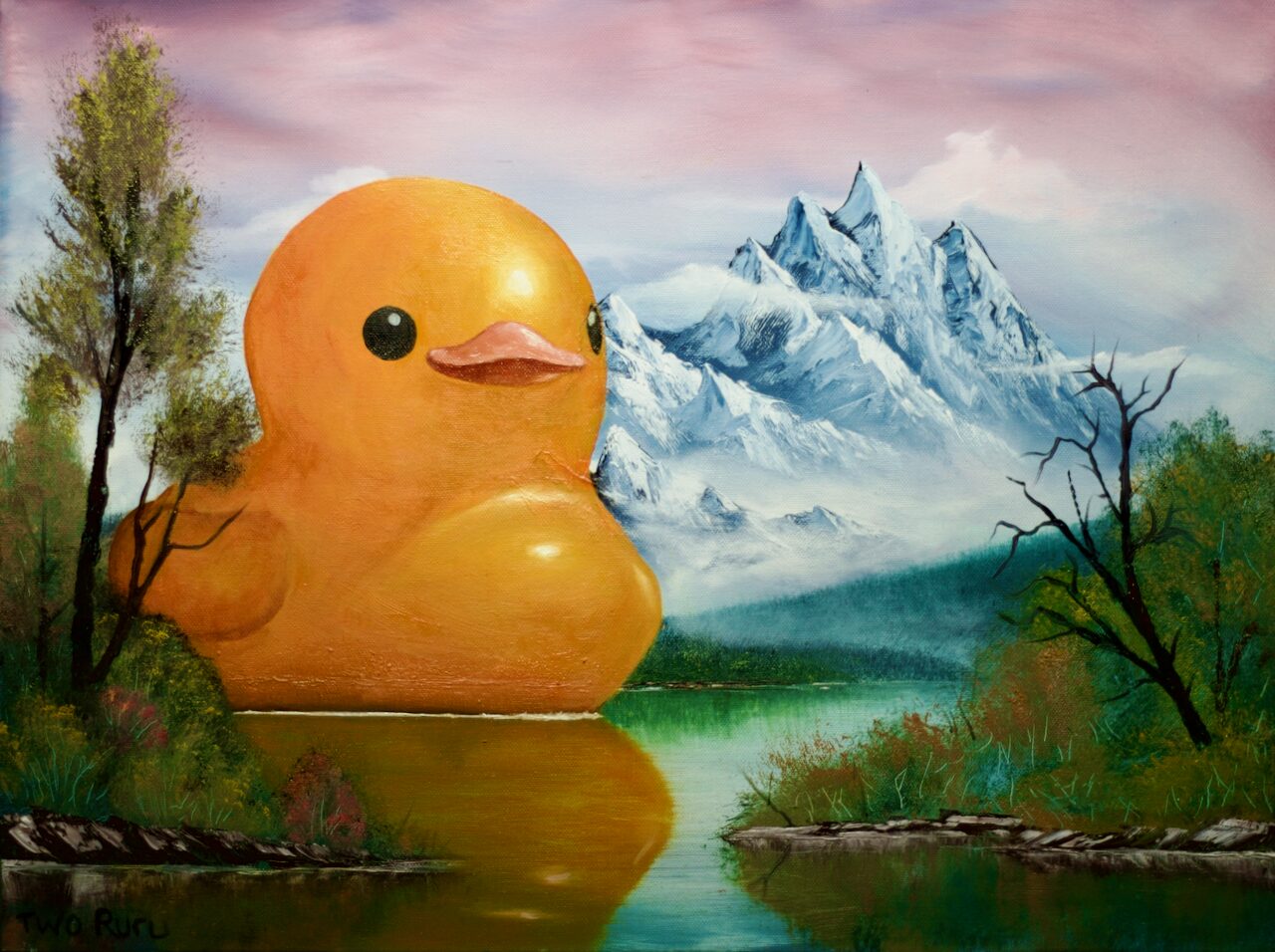
    This painting of Moby Duck – name suggested by a few excellent TikTok commenters – is the first artwork I’ve made that has done Numbers on social media since I was posting videogame artwork on Reddit. People have been asking for prints, so I’ve prepared the following options, to gather everything in one place.

    Physical prints

    People love prints, and who am I to deny them? These can be printed and shipped worldwide (yes, even the United States!) Buy using the link below.

    Digital prints

    I like to keep my artwork as accessible as possible, so I make digital PDF prints available for every artwork I do. Buy this, and print it however you like.

    Print Club

    I’ve been wanting to set up a print club for ages, and here we are! You can subscribe digitally (for less than the cost of one digital download) and get access to all the art I’ve ever made. And you can also subscribe to monthly prints, in postcard form! Check it below for all the details.

    T-shirts

    People always ask for t-shirts. Who am I to deny the will of the people? This ships worldwide.

    Stickers

    I do as I am told. These will make your laptop look both stylish and confusing (in a good way.)

    Flippin’ magnets

    How do they work? Don’t talk to a scientist, just grab one and stick it to your fridge and call it a miracle.

  • Cat painting

    Cat painting

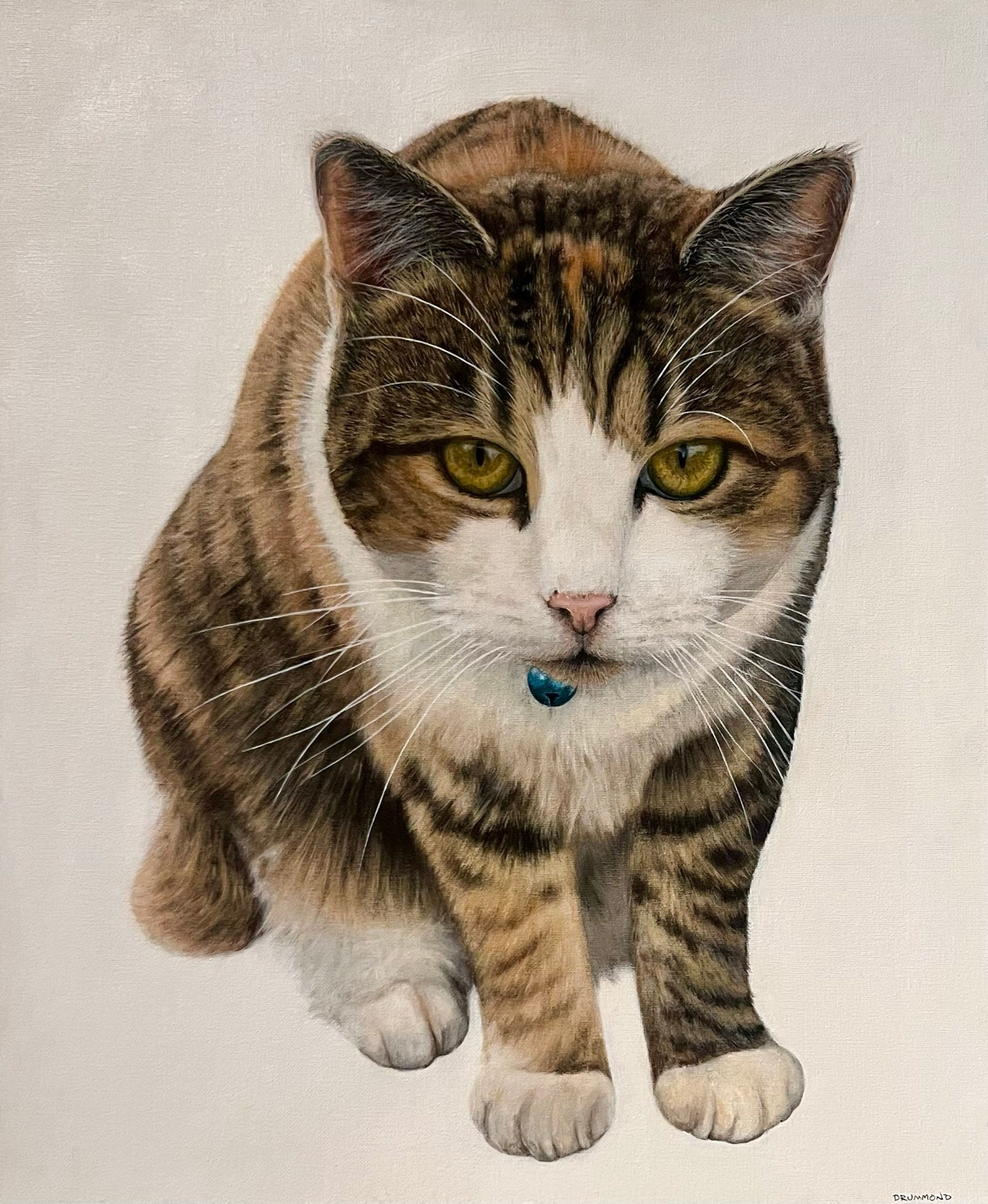
    This is a picture I painted of my cat Bianca, who died in 2023. I’d always wanted to try painting something photorealistic. Now I’ve done it and I never want to paint something photorealistic ever again. I wrote about the painting (and the cat) at some length, here. The painting took me about six years to finish, and the story is a weird mixture of how determined I can be to see something through while simultaneously not doing a goddamn thing to actually make progress. And yet, here she is.

    A picture of a photorealistic painting of a very pretty kitty cat.
  • Bored Ape Painting Club

    Bored Ape Painting Club

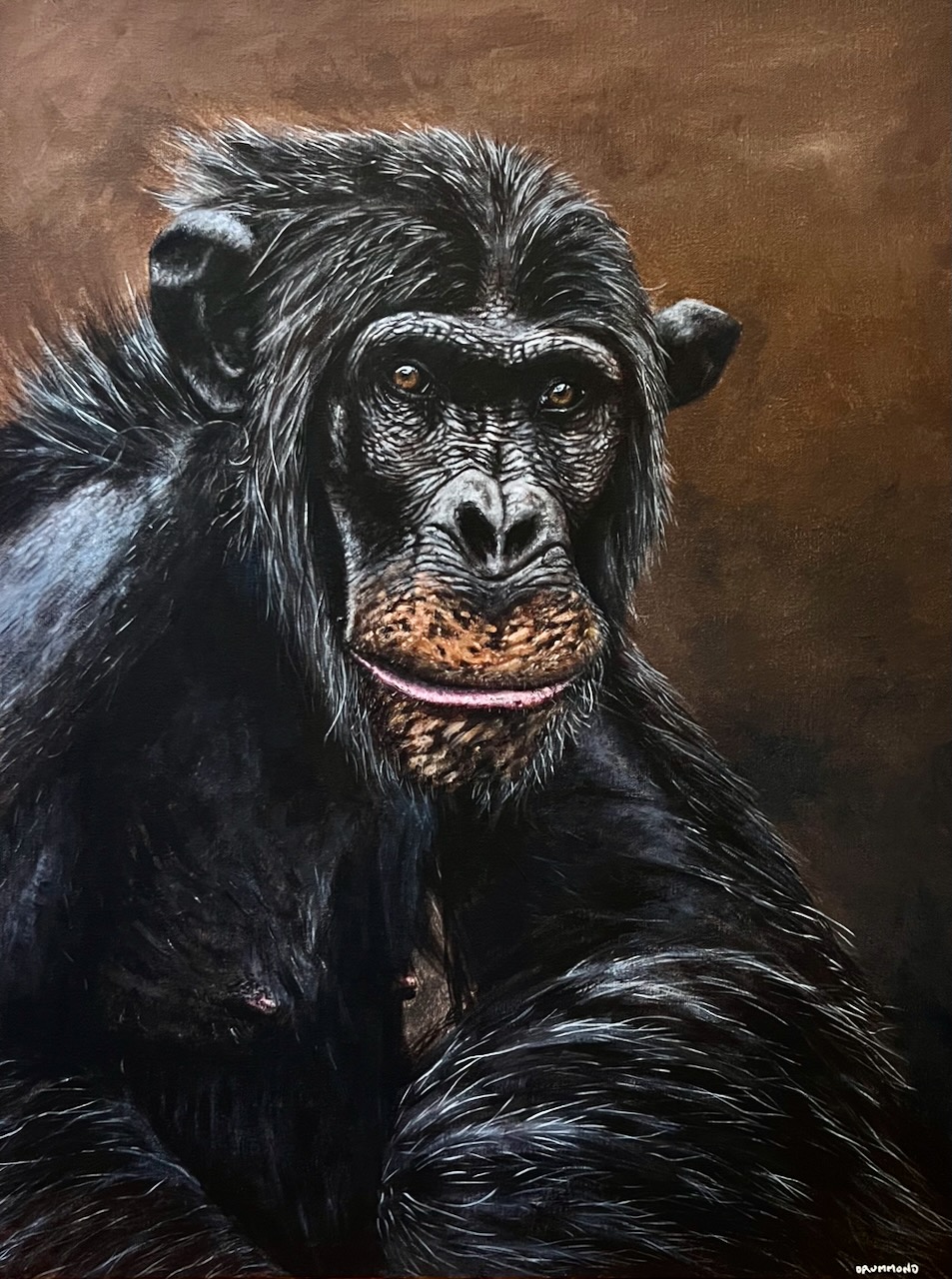
    I’m not a developer and yet I keep running into things that need development, and yet I have no money to pay developers. It’s all very annoying. When I started work the wildly over-engineered Bird Hat Grift Club I found that rare thing, a dev who was happy to accept payment in painting form. So I painted a Bored Ape for him.

    I haven’t made prints of this but if you want one for some reason, email me.

  • Luxon saga

    Luxon saga

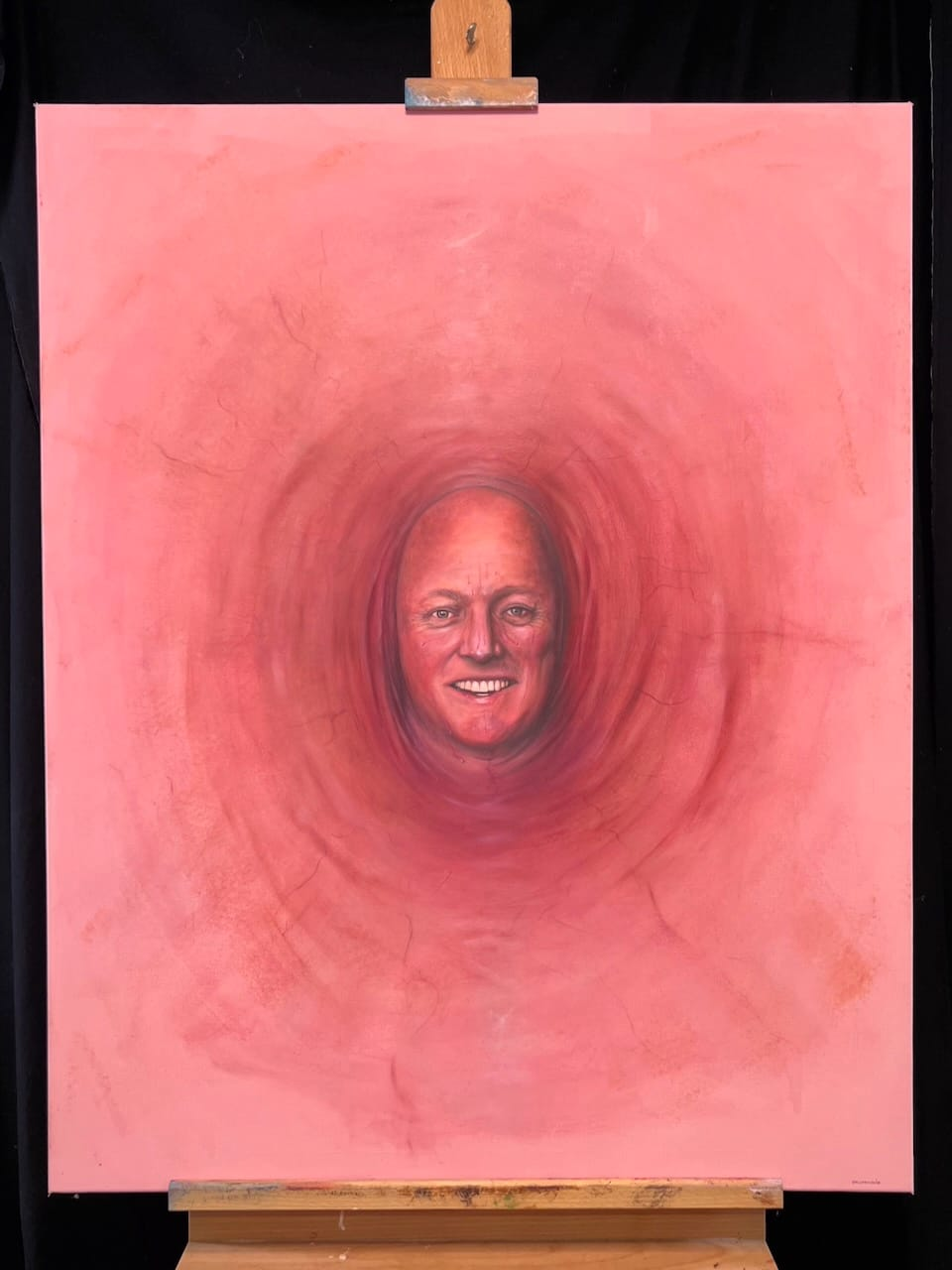
    I painted a picture of the New Zealand Prime Minister and tried to sell it on TradeMe. A few days before the auction ended it got banned. This caused a mini-Streisand and the painting got a lot of attention. I censored it and listed it on TradeMe again. This time it sold successfully. Together, the new owners and I collaborated to do a live gallery unveiling where I also uncensored the painting, restoring its original glorious form.

    I didn’t make prints of this because I didn’t feel the world needed more of this painting in it. In the unlikely event that you want one, email me.

    a completely beautiful and highly photorealistic portrait of new zealand's wonderful prime minister christopher luxon